Jade vine
Strongylodon macrobotrys
Description
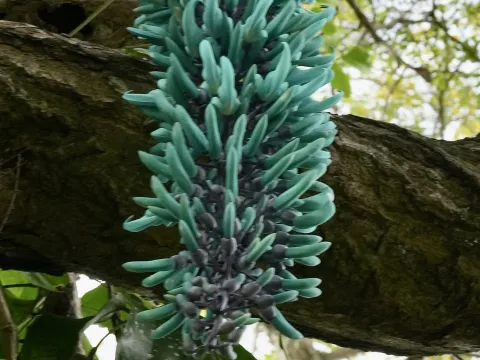
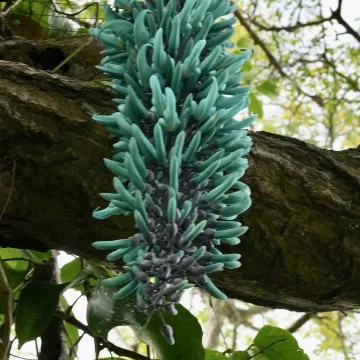
The Jade vine (Strongylodon macrobotrys) is a woody, perennial vine belonging to the Fabaceae (pea) family. It is globally recognized for its spectacular, claw-shaped flowers that hang in long, grape-like clusters, showcasing a unique and striking jade-green or turquoise hue that is rarely seen in nature.
Native to the tropical rainforests of the Philippines, the Jade vine typically inhabits damp areas near streams and riverbanks. In its original habitat, it plays a vital role in the ecosystem, although it is currently classified as vulnerable due to habitat loss and fragmentation, making botanical conservatory cultivation crucial for its survival.
Botanically, the plant is characterized by trifoliate leaves and vigorous, climbing stems. The flowers are specifically adapted for pollination by bats, which reach for the nectar while hovering, a process supported by the strong, pendulous structure of the inflorescences which can stretch up to three meters in length.
Cultivation of this species is intensive, requiring warm, tropical conditions with temperatures never dropping below 15°C. It demands high humidity levels and well-draining, nutrient-rich, slightly acidic soil. Adequate structural support is essential for its survival, as the vine exhibits vigorous growth and requires significant vertical space to thrive.
The main challenges in commercial and garden management include the control of pests such as spider mites and mealybugs, which thrive in indoor environments. Disease management focuses on preventing root rot through careful watering techniques. Regular monitoring of air circulation is mandatory to maintain plant health and prevent fungal outbreaks.
Photo gallery