Tradescant's aster
Symphyotrichum tradescantii
Description
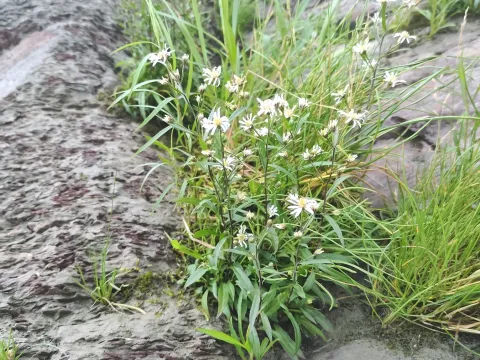
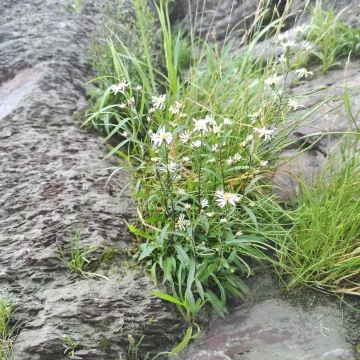
Tradescant's aster (lat. Symphyotrichum tradescantii) is a perennial herbaceous plant belonging to the Asteraceae family. Known for its elegant appearance and late-season blooms, it has become a staple in many perennial borders across temperate regions, providing color when most other flowers have faded.
Native to North America, specifically in regions across Canada and the United States, the plant is naturally adapted to moist habitats such as stream banks and wet meadows. This history of growth in diverse wild landscapes has contributed to its hardiness and ability to thrive in cultivated garden soils with adequate moisture management.
Botanically, the species is characterized by slender, leafy stems that typically grow between 50 to 120 centimeters in height. Its narrow, lance-shaped leaves provide a textured backdrop for the clusters of small, daisy-like flower heads. These blooms range in color from white to pale blue or lavender, appearing in late summer and continuing well into the autumn months.
When it comes to agronomy and gardening, Tradescant's aster requires full sun to light shade to achieve its best form. It performs exceptionally well in fertile, well-draining soils that do not dry out completely. Regular maintenance includes dividing established clumps every three to four years to prevent overcrowding and ensure vigorous growth in subsequent seasons.
In terms of economic and practical utility, the plant is primarily used for ornamental purposes in landscaping. It serves as an excellent nectar source for late-season pollinators, supporting local biodiversity. In horticulture, it is highly valued as a cut flower and as a structural element in perennial gardens that require late-autumn interest.
- Excellent hardiness in USDA zones 3 to 8.
- Resistant to most common garden pests when properly spaced.
- Needs consistent moisture for optimal floral production.
- Propagation is best achieved through division in early spring.
Photo gallery