Tessaria integrifolia
Tessaria integrifolia
Description
Tessaria integrifolia is a remarkable member of the Asteraceae family that distinguishes itself by growing as a tree rather than a typical herb. Native to the river basins of South America, this species is commonly known as a pioneer plant that dominates the riparian landscape along major waterways.
The geographic distribution of this tree is mainly concentrated in the floodplains of the Parana and Paraguay river systems. It acts as a primary stabilizer for river banks, where its dense root system creates a network that holds alluvial sediments together, effectively resisting the erosive power of seasonal floods.
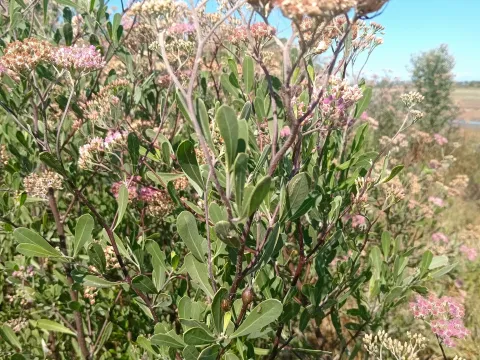
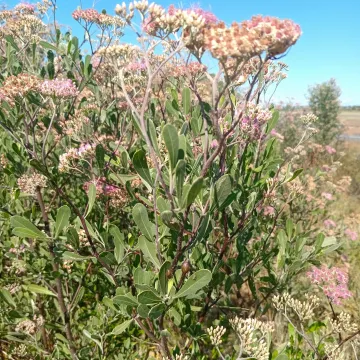
Botanically, the plant is characterized by its lanceolate leaves covered in fine hairs, which give the canopy a silvery appearance. These leaves are adapted to manage water loss effectively. The inflorescences consist of small composite flowers grouped in dense heads, which are highly attractive to local pollinators and support various insect populations.
Cultivation requirements for Tessaria integrifolia involve high light exposure and access to moist, well-draining substrate. It does not require intensive fertilization, as it is naturally adapted to nutrient-rich alluvial deposits. The species is highly resilient to hydrological fluctuations, making it an ideal candidate for ecological restoration projects in tropical and subtropical regions.
In terms of economic utility, the tree is harvested for its light-weight wood, which is utilized in the paper and pulp industry. Beyond commercial timber production, its role in modern agroforestry is significant:
- Soil erosion control in riverine environments.
- Fast-growing source for biomass energy.
- Habitat creation for local fauna.
- Natural pioneer species for degraded land restoration.
Photo gallery