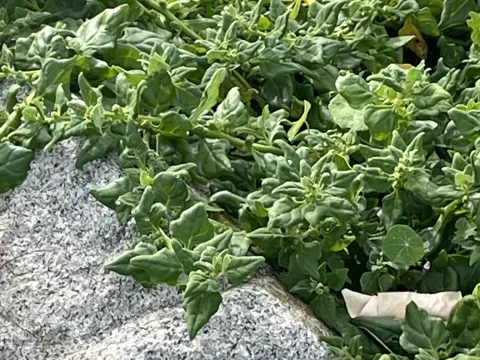

New Zealand spinach
Tetragonia tetragonoides (Pall.) Kuntze
Description
New Zealand spinach (Tetragonia tetragonoides) is a versatile leafy vegetable belonging to the Aizoaceae family. Unlike traditional spinach, this plant thrives in warm weather and is known for its sprawling, succulent stems and triangular, thick leaves. It provides a reliable source of greens even during the peak of summer when other varieties struggle to grow.
Native to New Zealand and Australia, the plant has become a popular crop worldwide due to its resilience. It was famously introduced to the Western world by Captain Cook, who used it to help prevent scurvy among his crew during voyages. Its ability to grow in various climates has made it a staple in many home gardens and small-scale commercial operations.
From a botanical perspective, the plant is a succulent annual with a low-growing or sprawling habit. Its thick leaves are high in moisture and possess a slightly salty flavor profile. A key feature is the plant's remarkable regenerative capacity; regular harvesting of the stem tips encourages denser, more vigorous regrowth, extending the harvest season well into autumn.
Cultivation requirements for Tetragonia are relatively modest. It prefers full sun and well-drained, fertile soil. It is drought-tolerant once established but performs best with consistent irrigation. In regions with cooler climates, starting seeds indoors or in a greenhouse is recommended to maximize the growing period, as the plant grows slowly until the soil temperature warms up.
- Nutritional profile: high in vitamin C, antioxidants, and dietary fiber.
- Culinary uses: sautéed, blanched, or added fresh to green salads.
- Pest resistance: naturally hardy with few serious disease issues.
- Maintenance: requires occasional thinning and weed control to thrive.
The economic and culinary value of New Zealand spinach lies in its productivity and ease of care. It is an excellent choice for organic gardeners looking for high-yield leafy greens that do not require constant monitoring. Beyond its use in cooking, it is recognized for its health benefits, offering a nutritious alternative that stands up well to various cooking methods.
Photo gallery