Turpentine bush
Ericameria laricifolia (A. Gray) Shinners
Description
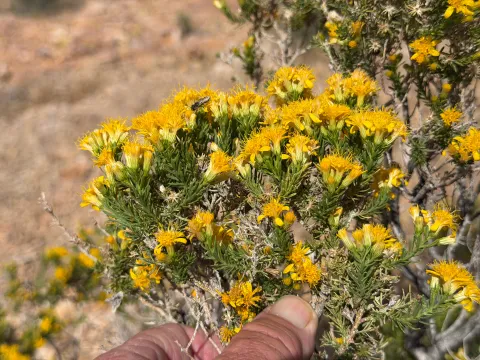
Turpentine bush (Ericameria laricifolia) is a hardy, evergreen subshrub belonging to the Asteraceae family. It is widely recognized for its resinous foliage and exceptional resilience in hot, arid environments, making it a valuable candidate for water-wise gardening and ecological restoration.
The plant is native to the southwestern United States and northern Mexico. It typically thrives in rocky soils, mountain foothills, and scrublands, where it has evolved to withstand intense solar radiation and minimal rainfall, demonstrating high drought tolerance once established.
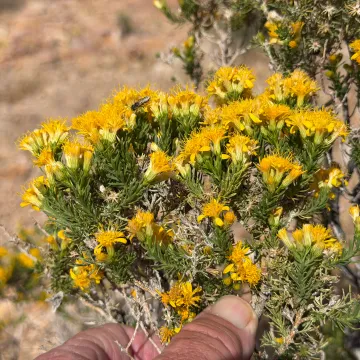
Morphologically, this species forms a compact, rounded mound reaching up to three feet in height. Its needle-like leaves are densely packed along the stems, providing a textural interest similar to coniferous plants. During the late summer and autumn, the bush produces an abundance of bright yellow flower heads that attract bees and butterflies.
Cultural requirements for Ericameria laricifolia emphasize the necessity of well-draining soil and full sun exposure. In a garden setting, it requires almost no supplemental irrigation once the root system is well-developed. Gardeners should avoid amending the soil with excessive organic matter, as this plant is perfectly adapted to nutrient-poor, rocky substrates.
Regarding health and maintenance, the plant is relatively pest-free. However, the primary management concern is preventing overwatering, which can lead to root rot. Under appropriate dry conditions, it serves as an excellent low-maintenance ornamental, providing a vibrant color display when many other desert plants have finished their growth cycle.
Photo gallery