

Description
Valerian (Valeriana officinalis L.) is a perennial flowering plant belonging to the Caprifoliaceae family. As an agricultural crop, it is cultivated primarily for its rhizomes and roots, which are highly valued in the pharmaceutical industry for their sedative and anxiolytic properties, derived from a complex mix of valepotriates and essential oils.
The plant is native to temperate regions of Europe and Asia. Today, it is commercially grown across many parts of the Northern Hemisphere, adapting well to diverse temperate climates. Successful cultivation is highly dependent on matching the local environment with the plant's specific needs for consistent moisture and nutrient-rich soil.
Botanically, valerian features a thick, short rhizome system with many long, fibrous roots. The stems are hollow, erect, and can grow up to 1.5 meters in height. The foliage is pinnately divided, and the plant produces small, fragrant, pinkish-white flowers clustered in corymbs. The roots are harvested usually in the autumn of the second year, as this is when the concentration of active medicinal compounds reaches its peak.
Optimal growth requires fertile, loam, or sandy-loam soils with a neutral pH level. As a moisture-loving crop, valerian requires careful irrigation management during dry spells. Cultivation practices include thorough soil preparation, weed control during the establishment phase, and periodic organic fertilization to ensure robust development of the root system.
The commercial use of valerian is extensive. Key applications include:
- Formulation of herbal medicines for sleep and stress relief.
- Extraction of essential oils for the fragrance and cosmetic industries.
- Inclusion in health supplements and tinctures for veterinary use.
Agricultural management must address specific pathological risks. Common diseases affecting the crop include powdery mildew and various root rots, often exacerbated by waterlogging. Typical pests include wireworms, which can severely damage roots, and aphids. Implementing a strict crop rotation schedule and integrated pest management strategies is essential for preventing these issues and maintaining high productivity.
Контент-граф
Connections · Valerian
Most often together:
Marketplace
Products · 8


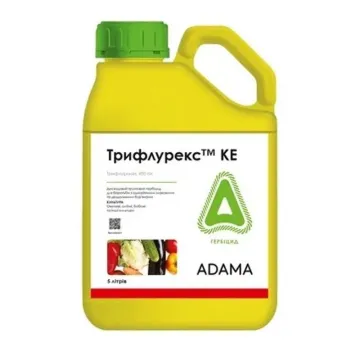
Triflurex 240 g.e., (Trifluralin, 240 g/l)
F.A.GAN Chemical Manufacturers Ltd. Israel, member
Herbicides, Desiccants
0
0
·
53
1 offer
12.89 €
Купить

Treflan
Govan Commercial International & Service
Herbicides, Desiccants
0
0
·
47
8 offers
6 €за 1 л
Купить

Patrick C.E.
F.A.GAN Chemical Manufacturers Ltd. Israel, member
Herbicides, Desiccants
0
0
·
30
1 offer
0.83 €
Купить

Trifluralin 480 g/L, herbicide
F.A.GAN Chemical Manufacturers Ltd. Israel, member
Herbicides, Desiccants
0
0
·
20
7 offers
6.1 €за 1 л
Купить
