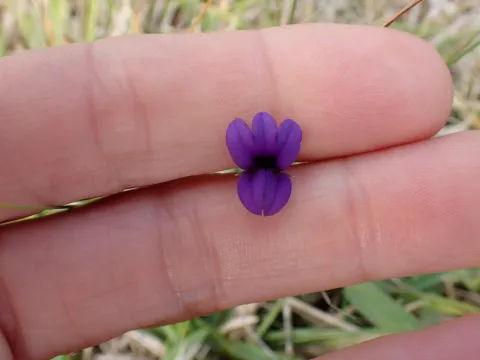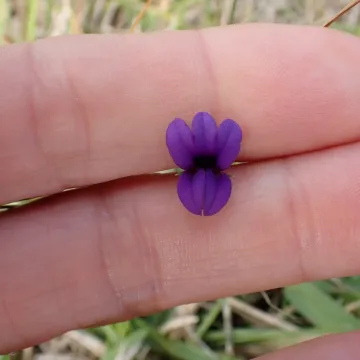

Wild violet
Monopsis unidentata (W. T. Aiton) E. Wimm.
Description
Monopsis unidentata, often referred to in specific contexts as a type of wild violet, is a herbaceous plant belonging to the Campanulaceae family. While not a conventional agricultural commodity, it serves as a significant ornamental species in specialized horticulture, favored for its distinct floral appearance and adaptability to managed landscapes.
The plant originates from Southern Africa, where it naturally inhabits moist environments, wetlands, and riparian zones. Its evolutionary history has endowed it with a preference for high soil moisture, a characteristic that modern growers must replicate to ensure vigorous growth and optimal health in domestic or commercial garden settings.
Botanically, Monopsis unidentata features slender stems and narrow leaves, forming compact, often prostrate mats. The flowers, typically vibrant in shades of blue or violet, possess a unique structure typical of the bellflower family. These plants are prized for their long-lasting blooming season, which spans from late spring through to the warmer months.
Agronomic management of this species focuses on maintaining consistent soil moisture and selecting sites with adequate light exposure. Key cultivation requirements include:
- Rich, well-draining soil with high organic content.
- Consistent irrigation to prevent wilting during peak growth phases.
- Regular deadheading to prolong the flowering cycle.
- Balanced fertilization to support root and flower development.
Regarding health management, the culture is prone to fungal infections if the growing environment becomes waterlogged or poorly ventilated. Common pests such as aphids and spider mites can infest the foliage, requiring integrated pest management strategies. Maintaining proper spacing and monitoring for early signs of disease are essential for successful cultivation of this ornamental species.
Photo gallery