
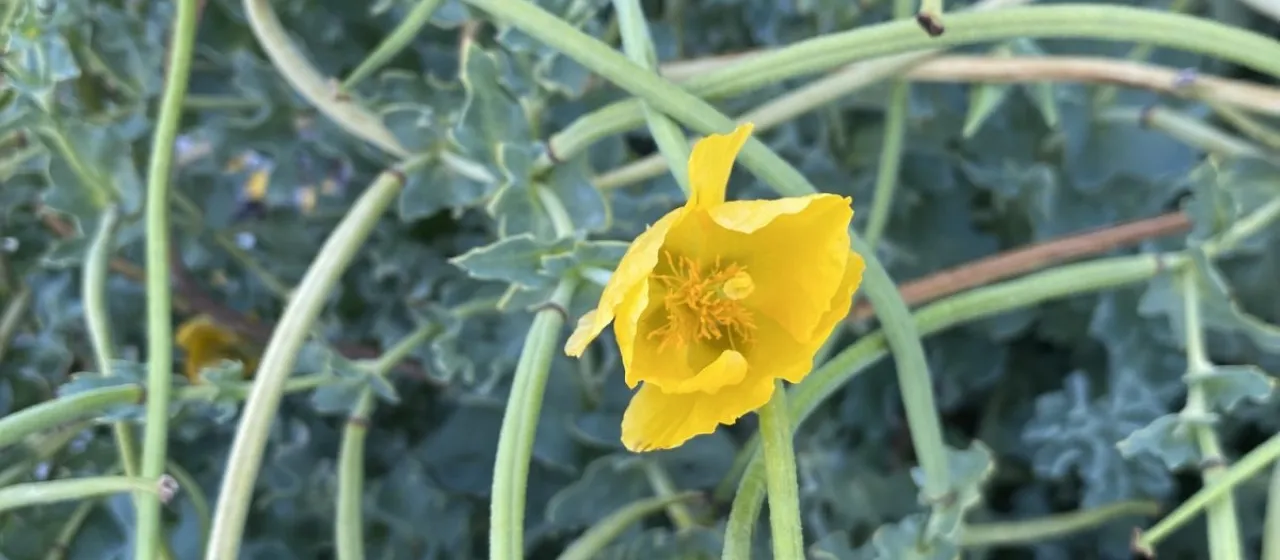
Description
Yellow hornpoppy (Latin: Glaucium flavum) is a biennial or perennial herbaceous plant belonging to the Papaveraceae family. Recognized for its distinctive bright yellow flowers and glaucous, lobed foliage, the plant is valued primarily for the medicinal alkaloids contained within its milky sap.
The plant originates from the Mediterranean region, with its natural range extending across coastal Europe, Northern Africa, and parts of the Caucasus. As an agricultural crop, it is cultivated specifically for its chemical profile, requiring conditions that mimic its native coastal habitats, such as well-draining, sandy, or gravelly soils.
Botanically, the species is characterized by a deep taproot and a rosette of leaves that emerge in the first year, followed by long, horn-shaped seed pods. Its resilience in saline environments and tolerance to windy coastal conditions make it a unique candidate for cultivation on marginal lands that may not be suitable for traditional cereal crops.
The cultivation of yellow hornpoppy requires careful soil management. It thrives in sunny locations with excellent drainage to prevent root rot. Seeding is typically performed in early spring or autumn. Farmers must ensure proper plant spacing to facilitate airflow, which is critical for reducing the risk of fungal pathogens in dense plantation stands.
The primary хозяйственное significance of this crop lies in the extraction of glaucine. This alkaloid is widely processed by pharmaceutical companies to produce antitussive medications. Due to its specific medicinal properties, the global demand for standardized raw materials from Glaucium flavum supports its status as a specialized industrial crop.
- Common diseases: root rot, powdery mildew, verticillium wilt.
- Common pests: aphids, spider mites, leaf-chewing caterpillars.