


SKU #73359
·
52 views
CAUCASIAN AROMA
Caraway
User rating
0 votes0% positive reviews
No ratings yet — be the first.
Herbs
Caraway
Assignment
Spicy, Medicinal
About product

Caucasian Aroma is a hardy biennial dill (Carum L.) that forms a dense rosette of leaves in the first year and begins to produce seeds in the second year. The yield of greens reaches 1.8–2.0 kg/m², making it a valuable ingredient for salads and side dishes. The seeds have a mint-savory aroma that intensifies when fried over low heat – this method fully reveals their flavor.Dill is grown as an orna…
Herbs
Caraway
Assignment
Spicy, Medicinal
Description
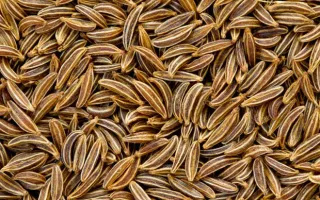
Caucasian Aroma is a hardy biennial dill (Carum L.) that forms a dense rosette of leaves in the first year and begins to produce seeds in the second year. The yield of greens reaches 1.8–2.0 kg/m², making it a valuable ingredient for salads and side dishes. The seeds have a mint-savory aroma that intensifies when fried over low heat – this method fully reveals their flavor.
Dill is grown as an ornamental garden crop: sowing can be carried out from early spring to early July and even under winter. To accelerate germination, seeds are recommended to be soaked for 24 hours, changing the water 3–4 times, then air-dried to a free-flowing state and sown at a depth of 2–3 cm, leaving 30–40 cm between rows. Winter sowing is done with dry seeds. Dill is light-loving, cold- and frost-hardy, does not require fertile soils, but yield increases on rich soils.
Culinary use of dill is diverse: it is added to bread, soups, salads, marinades for meat and fish, as well as sauces and sausages. Seeds are often used to flavor dishes, baked goods, pickling of cabbage and cucumbers. In addition to taste qualities, dill has useful properties: antihistaminic action helps with seasonal allergies, antiseptic properties promote wound healing and prevent infection development. Thanks to these characteristics, it is valued both in everyday cooking and in folk medicine.
Dill is grown as an ornamental garden crop: sowing can be carried out from early spring to early July and even under winter. To accelerate germination, seeds are recommended to be soaked for 24 hours, changing the water 3–4 times, then air-dried to a free-flowing state and sown at a depth of 2–3 cm, leaving 30–40 cm between rows. Winter sowing is done with dry seeds. Dill is light-loving, cold- and frost-hardy, does not require fertile soils, but yield increases on rich soils.
Culinary use of dill is diverse: it is added to bread, soups, salads, marinades for meat and fish, as well as sauces and sausages. Seeds are often used to flavor dishes, baked goods, pickling of cabbage and cucumbers. In addition to taste qualities, dill has useful properties: antihistaminic action helps with seasonal allergies, antiseptic properties promote wound healing and prevent infection development. Thanks to these characteristics, it is valued both in everyday cooking and in folk medicine.
Specifications
| Herbs | |
|---|---|
| Assignment | |
| Catalog | Catalog → Caraway |
| Originator | Фгбну Федеральный Исследовательский Центр Всероссийский Институт Генетических Ресурсов Растений Имени Н.И.Вавилова |
| Country | Russia |
Store offers
Prices are updated on loadLoading offers…
Aggregator catalog: prices are collected automatically from store websites, normalized by AI and converted at the current exchange rate. Before ordering, confirm the price and availability on the store's website. This block is not indexed by search engines — the data is loaded after the page opens.
See also
Often considered together with this variety





Comments · 0