


SKU #73327
·
48 views
ARSHAN
Couch Grass
User rating
0 votes0% positive reviews
No ratings yet — be the first.
Use Direction
Food, Pasture
Plant Height
50-100 cm
Protein content (%)
10-15%
About product

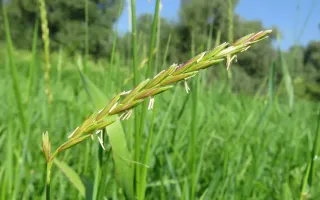
ARSHAN is a rootless Elymus (Elymus trachycaulus), a medium-summer clump-forming loose-culm plant 50-100 cm tall, widely used as a forage crop for mowing and grazing. The plant is characterized by a dense clump with numerous thin stems, narrow leaves of light or dark green color, which gradually coarsen and become stiff as they grow. The inflorescence is a loose spike 10-12 cm long, containing 2-3…
Use Direction
Food, Pasture
Plant Height
50-100 cm
Protein content (%)
10-15%
Description
ARSHAN is a rootless Elymus (Elymus trachycaulus), a medium-summer clump-forming loose-culm plant 50-100 cm tall, widely used as a forage crop for mowing and grazing. The plant is characterized by a dense clump with numerous thin stems, narrow leaves of light or dark green color, which gradually coarsen and become stiff as they grow. The inflorescence is a loose spike 10-12 cm long, containing 2-3 florets pressed against the rachis; seeds have an oblong-linear shape, 1000 seeds weighing 2.8-3 g.
ARSHAN Elymus differs in good root system permeability, which can penetrate deeper than one meter and ensures drought resistance. The culture grows well on chernozem and gray forest soils but is also capable of developing on almost any soils, except wet marshy ones. Hay yield is 30-35 c/ha, and seeds are 2-6 c/ha. Hay collected at the budding stage contains about 10.6% protein, and at the flowering stage - 9.6%. Using 100 kg of hay yields 54 feed units and 4.5 kg of digestible protein.
Despite the similarity in appearance with creeping Elymus, ARSHAN has weaker standing persistence and lower palatability compared to most grasses. This makes it a preferable choice for mowing, where mechanical damage resistance and low probability of field contamination by other Elymus species are important. The culture is also studied as a phytoremediant for restoring the fertility of saline lands, due to its ability to leach salts from the soil under optimal irrigation regimes.
ARSHAN Elymus differs in good root system permeability, which can penetrate deeper than one meter and ensures drought resistance. The culture grows well on chernozem and gray forest soils but is also capable of developing on almost any soils, except wet marshy ones. Hay yield is 30-35 c/ha, and seeds are 2-6 c/ha. Hay collected at the budding stage contains about 10.6% protein, and at the flowering stage - 9.6%. Using 100 kg of hay yields 54 feed units and 4.5 kg of digestible protein.
Despite the similarity in appearance with creeping Elymus, ARSHAN has weaker standing persistence and lower palatability compared to most grasses. This makes it a preferable choice for mowing, where mechanical damage resistance and low probability of field contamination by other Elymus species are important. The culture is also studied as a phytoremediant for restoring the fertility of saline lands, due to its ability to leach salts from the soil under optimal irrigation regimes.
Specifications hover over for a hint about the specification
|
Use Direction
Use Direction
Dual-purpose hybrids: for silage and grain in all growing regions. These are "stay-green" type hybrids, meaning the plants remain green for a longer period. However, this does not affect the sugar, cellulose, and hemicellulose content, nor the degree of lignification of the plant... |
|
|---|---|
| Plant Height | 50-100 cm |
| Protein content (%) | 10-15% |
| Catalog | Catalog → Couch Grass |
| Originator | Фгбун Сибирский Федеральный Научный Центр Агробиотехнологий Ран |
| Country | Russia |
Store offers
Prices are updated on loadLoading offers…
Aggregator catalog: prices are collected automatically from store websites, normalized by AI and converted at the current exchange rate. Before ordering, confirm the price and availability on the store's website. This block is not indexed by search engines — the data is loaded after the page opens.
See also
Often considered together with this variety




Recently viewed
Similar items in this catalog section




Comments · 0