
Two-component liquid silicone – the best choice for mold making
Two-component liquid silicone has gained widespread use in construction and decoration, art, furniture manufacturing, archaeology, automotive, medical, cosmetic, and metalworking industries.
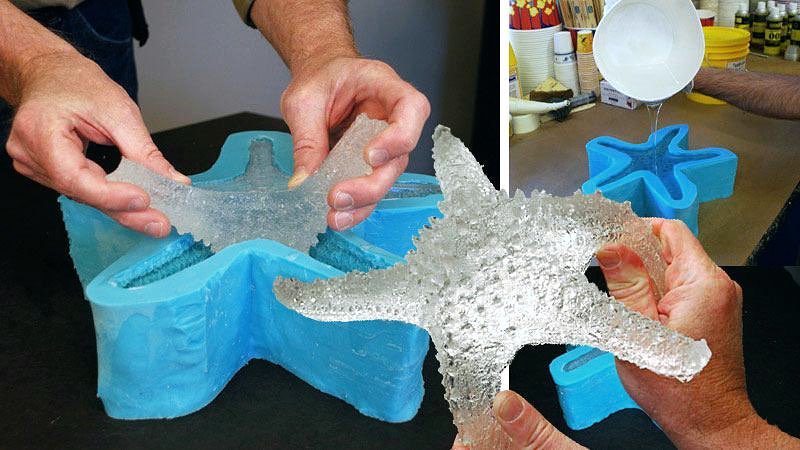
Two-component silicone has gained widespread use in construction and decoration, art, furniture manufacturing, archaeology, automotive, medical, cosmetic, and metalworking industries. It possesses a large number of positive characteristics and requires adherence to certain working rules.
Types of two-component silicones
The presented mixtures consist of base and catalyst, performing the curing function. There are several types based on the components used. Manufacturers use tin and platinum as catalysts.
The first variant combines optimal cost and operational characteristics. Products of the second group belong to more expensive materials. Their main advantage is microbiological resistance.
The main positive properties of silicone compounds are:
- high strength and elasticity;
- ability to take on various shapes, replicating them down to the smallest details;
- maintaining characteristics unchanged under temperature influence over a wide range (from -50 to 250 degrees);
- high tensile strength;
- low risk of deformation;
- ability to repel moisture;
- resistance to radiation and other external negative factors;
- no risk of toxin release even during heating;
- ability to isolate electrical impulses;
- high non-flammability ratings.
The material is not affected by negative influences of ultraviolet radiation, alkalis, chemical compounds, electromagnetic fields, salts, etc.
Features of using liquid plastic
Two-component compositions are most often used for producing various items, including molds for casting. Their components are mixed using special equipment. The main problem at this stage is the formation of air bubbles. Such inclusions disrupt the relief and texture, degrade the product's functionality and characteristics.
Air bubbles can be prevented by several methods. The fastest and most expensive is vacuuming. This requires a special chamber, experience, and skill from the operator. During the curing process, pressure helps eliminate bubbles. Another effective method for eliminating defects is vibration. This technology is often used in small-scale production. It can be implemented using a vibration table.
Experts recommend carefully mixing two-component compositions.
This will help minimize the risk of bubble formation. It is preferable
to pour the mixture into one point. The compound will spread evenly
and displace air by its own mass.
After pouring, the silicone mold is left to cure. The duration of the
process depends on the composition's characteristics. The finished
product easily separates from the walls. The walls can be additionally
processed with special agents.
Editorial team agronom.info
Materials are prepared by the portal's agronomists and editors. We use only trusted sources: Ukrainian agricultural universities, variety registries, open scientific publications.

Comments · 0