
Job's tears
Coix lacryma-jobi L. var. ma-yuen (Rom. Caill.) Stapf
Description
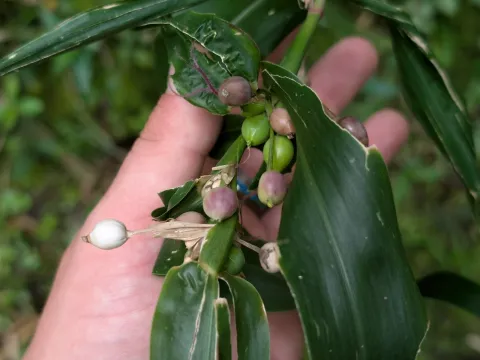
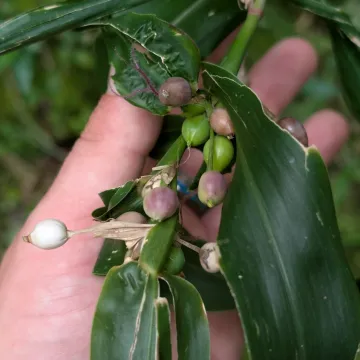
Job's tears (Coix lacryma-jobi L. var. ma-yuen) is an annual herbaceous plant belonging to the grass family (Poaceae). This grain crop is characterized by its hard, white, bead-like structures that enclose the edible kernel, earning it the popular name often associated with its resemblance to teardrops.
Originating from Southeast Asia, Job's tears has been cultivated for centuries in tropical and subtropical regions. Today, it remains a vital crop in countries such as China, Japan, and Korea. The plant thrives in warm, humid climates, requiring a long growing season to reach maturity and produce a consistent grain yield.
Botanically, the plant stands out due to its tall, reed-like stature and lanceolate leaves. The inflorescence consists of spikes where the female spikelet is enclosed in a hardened involucre. This specialized shell protects the grain from pests and environmental stressors, contributing to its durability and potential for storage in traditional agricultural systems.
For successful cultivation, Job's tears requires fertile, well-drained soils and high moisture availability throughout the growing cycle. Planting should be timed to avoid late frosts, as the plant is highly sensitive to cold temperatures. Integrated pest management is essential, as the crop can be susceptible to various fungal pathogens and insect infestations that typically affect cereal grains.
The economic utility of Job's tears is significant across diverse sectors. In food production, it is processed into flour, polished grains, and tea, prized for its nutritional value and gluten-free properties. Furthermore, in traditional medicine, it is frequently used to promote health and vitality, while the ornamental shells are commonly harvested for creating artisanal jewelry and religious artifacts.
Photo gallery