Alexandrian laurel
Calophyllum inophyllum L.
Description
The Alexandrian laurel (Calophyllum inophyllum L.) is a long-lived, evergreen tree belonging to the Clusiaceae family. Often reaching heights of 8 to 20 meters, it is characterized by its twisted, spreading branches and thick, glossy, leathery leaves, making it a prominent feature of tropical coastal landscapes.
Originating from the tropical regions of East Africa, India, and Southeast Asia, this species has naturally adapted to maritime environments. It plays a critical ecological role in coastal stabilization, effectively preventing sand dune erosion and serving as a natural barrier against storms in its native range.
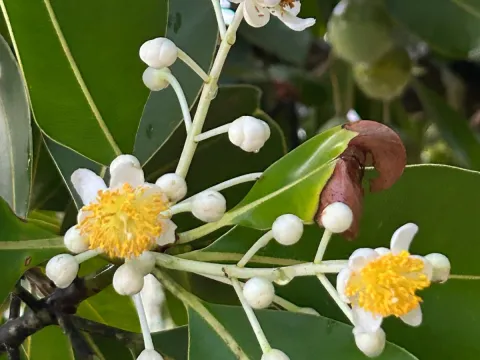
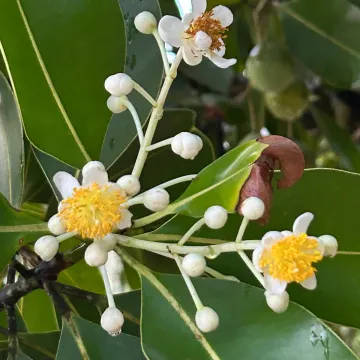
Botanically, the tree is known for its slow growth rate and deep taproot system, which allows it to tap into deep groundwater supplies. The flowers are fragrant and white, while the fruit is a globose drupe. Once mature, the seeds inside are highly valued for their oil content, which is rich in fatty acids and specialized chemical compounds.
The agronomic requirements for Alexandrian laurel focus on a humid tropical climate with no risk of frost. It thrives in well-drained soils, typically sandy or rocky, and exhibits a remarkable tolerance to salt spray and saline groundwater. Irrigation is essential during the initial growth phase, but mature trees are notably resilient once established.
Economically, the species is primarily cultivated for the extraction of 'tamanu oil' from its kernels, which is widely utilized in the cosmetics and pharmaceutical industries. Its wood, known for being heavy, hard, and resistant to fungal decay, is traditionally used in high-quality furniture making and the construction of traditional boats.
- Extreme tolerance to salinity and salt spray.
- High market demand for medicinal tamanu oil.
- Superior durability and rot resistance of the timber.
- Low maintenance requirements once fully grown.
Photo gallery