
American beech
Fagus grandifolia Ehrh.
Description
The American beech (Fagus grandifolia Ehrh.) is a significant deciduous tree species belonging to the Fagaceae family. Known for its majestic appearance and historical importance, it serves as a keystone species in the hardwood forests of North America, where it has played a vital role in forest ecology for centuries.
Native to the eastern regions of North America, this species thrives in climates characterized by moderate to high rainfall. It prefers deep, nutrient-rich, and well-drained soils, typically found in coves or protected valleys. As a climax species, the American beech is highly shade-tolerant, allowing it to regenerate successfully under a dense forest canopy.
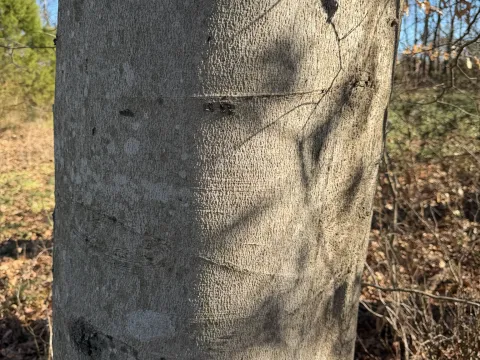
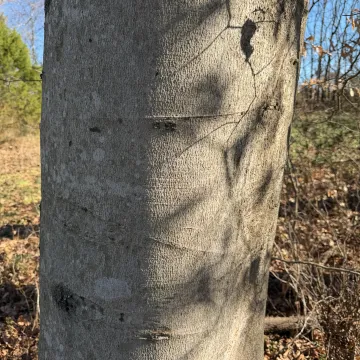
Botanically, the tree is identified by its distinctive smooth, silver-gray bark that remains unchanged even in mature specimens. The leaves are ovate-oblong with serrated margins, turning a rich golden bronze in autumn. The tree produces small, triangular nuts protected by a prickly burr, which are a major food source for various forest wildlife.
For successful cultivation, attention must be paid to soil aeration and moisture retention. Unlike many other forest trees, the American beech has a shallow root system, making it vulnerable to soil compaction and drought stress. In managed forests, selecting appropriate planting sites and maintaining a forest litter layer are crucial agronomic practices to ensure tree health.
Economically, the wood of the American beech is highly valued for its hardness, density, and uniformity, making it ideal for furniture, flooring, tool handles, and food containers. In terms of protection, the tree faces challenges from pests such as the beech scale insect, which often precedes Nectria fungi infection, known as beech bark disease. Proper management through thinning and monitoring is essential for sustained productivity.
Photo gallery