Early wintercress
Barbarea verna (Mill.) Asch.
Description
Early wintercress (lat. Barbarea verna) is a herbaceous plant belonging to the Brassicaceae family. Recognized for its agricultural potential, this crop is cultivated both as a nutrient-rich leafy green and as an oilseed crop, valued for its early seasonal availability and hardiness in moderate climates.
Originating from Southern Europe, the plant has successfully expanded its range across various temperate regions globally. It is commonly found in cultivation across Western Europe, North America, and parts of Asia, where it is appreciated for its ability to thrive during cool spring conditions when other vegetables are not yet fully established.
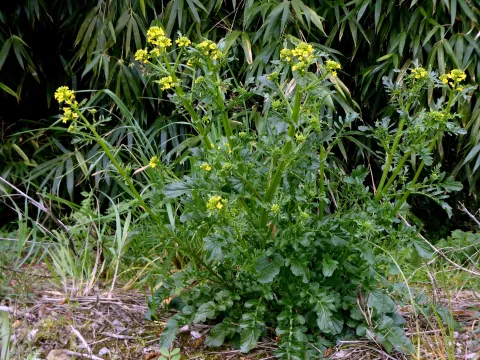
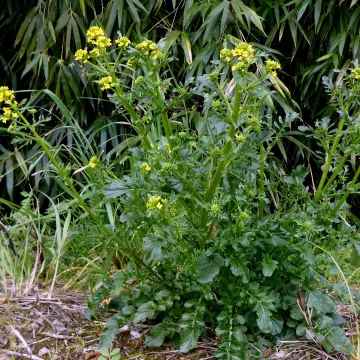
Botanically, Early wintercress is a biennial or annual plant characterized by a rosette of lyrate leaves and a branching flowering stem reaching up to 80 cm in height. The flowers are bright yellow, typical of the mustard family, and appear in racemes that attract numerous pollinators, making it an excellent plant for biodiversity in agricultural landscapes.
Success in cultivation requires moist, fertile soils with a neutral pH. The plant performs best in full sun or light shade. Agronomic practices focus on early spring sowing, adequate irrigation during dry spells to prevent premature bolting, and maintaining soil fertility. Its fast growth cycle allows for quick harvesting, making it a productive addition to short-season farming.
In terms of utilization, the leaves are widely consumed as a piquant salad green, providing a healthy dose of vitamin C and minerals. The seeds are an industrial source of oil, which can be used for technical purposes or processed into high-quality animal feed. Its versatility makes it a valuable niche crop for diversified agricultural operations.
- Excellent source of vitamins and minerals.
- High tolerance to cold spring weather.
- Rapid maturity cycle for early harvest.
- Benefits ecosystem health as a pollinator attractant.
- Potential for sustainable bio-oil production.
The crop is susceptible to common cruciferous pests such as flea beetles, cabbage worms, and aphids. Pathogens like downy mildew and white rust may occur in damp conditions with poor air circulation. Integrated pest management, including crop rotation with non-brassica species, is essential for maintaining plant vigor and maximizing the yield potential of the crop.
Photo gallery