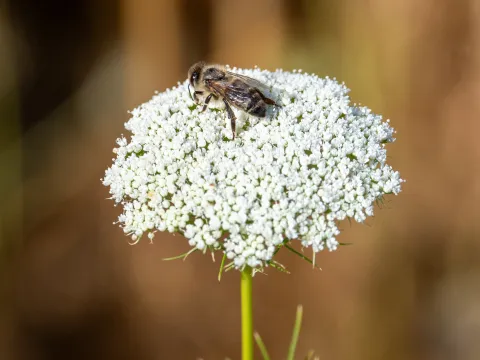
Toothpickweed
Ammi visnaga (L.) Lam.
Description
Toothpickweed (Ammi visnaga) is a biennial or annual herbaceous plant belonging to the Apiaceae family. Native to the Mediterranean basin, it has been used for centuries in traditional medicine and is now commercially grown as a pharmaceutical crop due to its unique chemical profile. The name "toothpickweed" stems from the traditional practice of using its hardened fruit stalks as toothpicks.
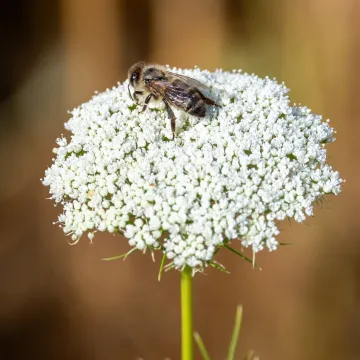
Botanically, the plant is characterized by a sturdy, branched stem that can grow up to a meter tall, adorned with finely divided, fern-like leaves. Its most distinctive feature is the large, compound umbel inflorescence. The rays of these umbels thicken and turn woody as the seeds mature, creating a structural framework that is unique among related species.
Ammi visnaga thrives in full sun and requires well-drained, nutrient-rich soils to reach its full potential. It exhibits good tolerance to drought once established, but it requires adequate moisture during the germination and early seedling stages. In agricultural settings, it is usually sown in rows, allowing sufficient space for mechanical weeding and optimal air circulation to minimize the risk of moisture-related diseases.
The primary economic value of toothpickweed lies in its pharmacological applications. The plant's seeds are a rich source of khellin and visnagin, which are potent antispasmodics. These compounds are extracted to formulate medications used for treating conditions such as bronchial asthma, angina pectoris, and various smooth muscle spasms, making it a high-value crop in the herbal medicine sector.
Successful cultivation requires vigilance against common pests and pathogens. Fungal infections, such as powdery mildew, can pose a risk in humid environments or if planting density is too high. Effective management involves practicing proper crop rotation, maintaining good soil drainage, and harvesting the umbels promptly when they turn brown to ensure the seeds retain their maximum content of active pharmacological components.
Photo gallery