Bishop's weed
Ammi majus L.
Description
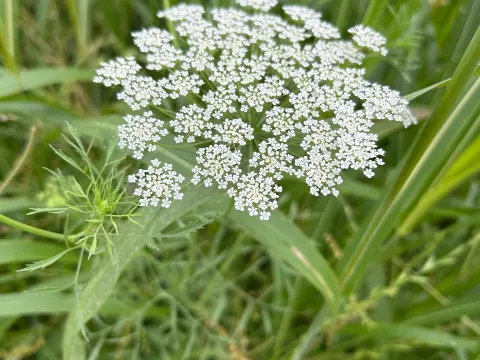
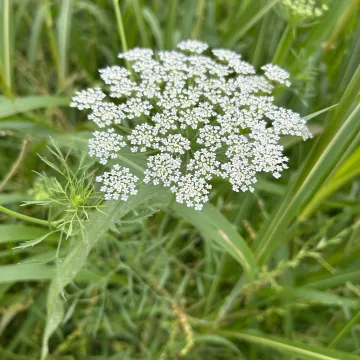
Bishop's weed (Ammi majus L.), also known as false queen Anne's lace, is an annual flowering plant belonging to the Apiaceae family. While it is often mistaken for other cumin-related species, it is primarily distinguished by its high content of furanocoumarins, which make it a significant crop for the global pharmaceutical industry.
Native to the Mediterranean basin and Western Asia, the plant has spread across various temperate regions worldwide. It is cultivated commercially for its seed production, which serves as a raw material for dermatological medicines. Beyond its industrial role, it is increasingly valued as a popular ornamental plant in commercial floristry due to its airy, delicate white flower heads.
Botanically, it typically grows up to 1 meter in height, characterized by its fine, feathery foliage and flat-topped umbels. The plant thrives in well-drained, sandy loam soils and requires full sun exposure to reach its maximum potential. It is adapted to diverse environmental conditions but remains sensitive to waterlogged soil, which can lead to root system decay.
Successful cultivation requires careful field preparation and weed management, particularly during the seedling stage when the plant is most vulnerable to competition. Providing adequate potassium and phosphorus fertilizers supports strong stem development and improves the quality of the harvested seeds. Consistent, yet moderate, watering is essential during the flowering and seed-setting phases.
- Soil requirements: Well-drained, fertile soil.
- Planting season: Early spring after the frost threat passes.
- Planting depth: 0.5–1 cm for optimal germination.
- Maintenance: Regular weeding and monitoring for pests.
- Harvesting: Harvesting when umbels turn brownish-grey.
In terms of plant health, it is susceptible to aphids and fungal diseases like powdery mildew, particularly in regions with high humidity. Proper crop rotation—avoiding other members of the Apiaceae family—is recommended to mitigate soil-borne diseases. Efficient pest control and integrated agricultural practices are critical for maximizing annual yield and medicinal potency.
Photo gallery