Blueberry ash
Elaeocarpus reticulatus Sm.
Description
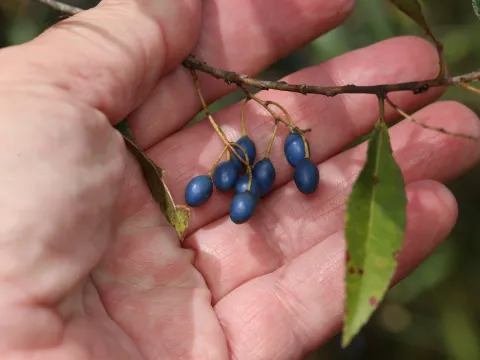
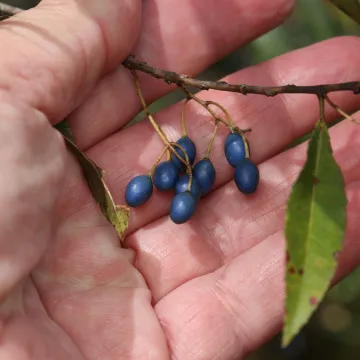
Blueberry ash (Latin: Elaeocarpus reticulatus) is a prominent evergreen tree or large shrub belonging to the Elaeocarpaceae family. It is widely recognized for its elegant, fringed, bell-shaped flowers that bloom in spring, followed by attractive deep blue berries, making it a highly valued plant in professional landscaping and horticultural practice.
Native to the eastern regions of Australia, this species thrives in diverse habitats ranging from rainforest margins to open coastal forests. Its natural distribution demonstrates a high level of environmental adaptability, allowing it to be cultivated successfully in various temperate and subtropical climates across the globe as both an ornamental and an ecological enhancement plant.
Botanically, the plant is characterized by its glossy, elliptical leaves with a distinct netted vein pattern, which inspires its specific epithet. The flowers, appearing in pendulous racemes, are typically white or pinkish-white. The fruit, resembling small blueberries, is non-toxic and serves as a vital food source for various native avian species, contributing to local biodiversity.
Cultivation requirements involve planting in well-drained, slightly acidic, and organically rich soil. While it prefers full sun for optimal flowering, it demonstrates significant shade tolerance in its juvenile stages. Proper agrotechnical management requires consistent moisture, especially during dry spells, and the application of organic mulch to regulate soil temperature and moisture retention.
The practical application of Elaeocarpus reticulatus is primarily focused on urban forestry and garden design, serving as an excellent screen, hedge, or specimen tree. Key advantages of this cultivar include:
- Excellent year-round aesthetic appeal.
- Relative resilience to pests and common environmental stressors.
- Strong capacity to support local fauna populations.
- High pruning tolerance, allowing for versatile structural shaping.
Regarding health management, the primary concern is the prevention of root rot caused by waterlogged soil conditions. Although generally hardy, growers should monitor for common sap-sucking insects like scale or aphids during spring growth flushes. Integrated pest management and proper site selection remain the most effective strategies for maintaining healthy, vigorous plants.
Photo gallery