Japanese blueberry tree
Elaeocarpus decipiens Hemsl.
Description
The Japanese blueberry tree (Elaeocarpus decipiens Hemsl.) is an evergreen specimen belonging to the Elaeocarpaceae family. It is widely recognized in horticulture for its dense, glossy foliage and architectural form, making it a staple in various landscape applications ranging from formal gardens to urban street plantings.
Originating from East Asia, including Japan, China, and Taiwan, this plant is naturally adapted to forest edges and warm temperate climates. Its popularity as an ornamental crop has spread globally, particularly in areas with mild winters where its evergreen nature provides consistent visual interest throughout the year.
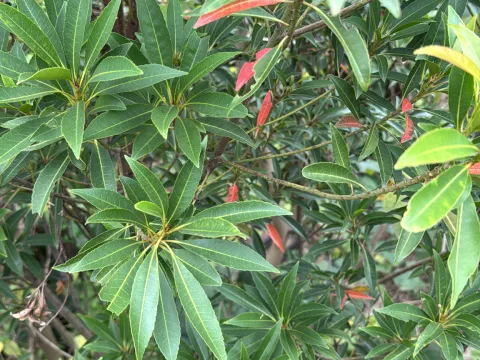
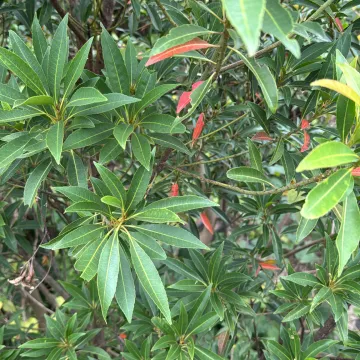
Botanically, the tree is characterized by its stiff, leathery leaves with serrated margins. A standout feature is the emergence of new growth, which often displays a vibrant reddish-copper hue. The small, bell-shaped white flowers hang in clusters during the spring, eventually producing small, blueberry-like dark drupes that add to its ecological value.
Cultivation requires well-drained, fertile soil with a neutral to slightly acidic pH. While the tree is relatively tolerant, it thrives best in full sun to partial shade. Irrigation management is critical during the establishment phase, ensuring the soil remains moist but never waterlogged, which can trigger root diseases in heavier soil types.
In terms of хозяйственное (utility) usage, the tree serves as an excellent privacy screen or hedge due to its thick foliage. It is also frequently utilized as a specimen tree. Its ability to tolerate air pollution makes it an ideal candidate for urban planning and highway landscaping where other ornamental species might fail.
- Resilience to urban pollutants and noise.
- Easy maintenance with minimal pruning required.
- Attractive year-round color from foliage changes.
Regarding pest and disease management, the tree is generally robust. However, growers should monitor for scale insects and aphids, which can occasionally infest the foliage. Providing proper air circulation through moderate thinning and avoiding overhead irrigation can significantly reduce the risk of common leaf spot diseases.
Photo gallery