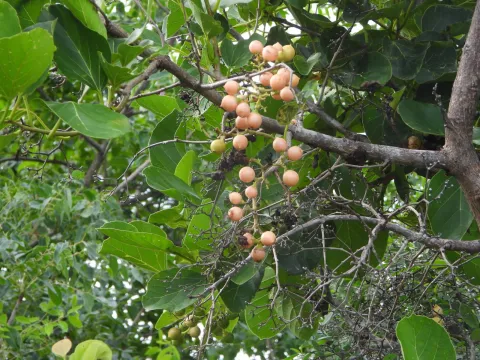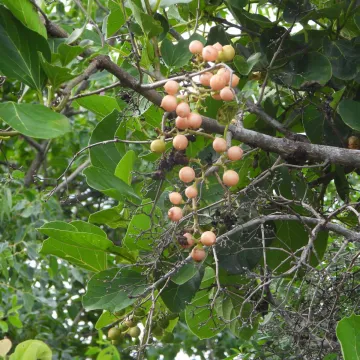
Cordia myxa
Cordia myxa L.
Description
Cordia myxa L., widely known as Sebesten or Assyrian plum, is a deciduous tree species belonging to the Boraginaceae family. This tree is highly valued for its edible fruits, which are used both as food and as a traditional remedy across its native distribution range in the tropical regions of Asia and North Africa.
The plant originates from the tropical zones of the Indian subcontinent and is now naturalized in many regions with similar climates, including the Middle East and Egypt. Its ability to tolerate dry conditions and varied soil types makes it a versatile species for agroforestry in arid and semi-arid environments.
Botanically, Cordia myxa is characterized by its spreading crown, leathery leaves, and small, white flowers that appear in clusters. The fruit is a drupe with a sticky, mucilaginous pulp, often referred to as "glue berry" due to the texture of its flesh, which is highly appreciated in traditional medicinal preparations.
For successful cultivation, the tree requires full sun exposure and well-draining soil. It is relatively drought-tolerant once established, but providing supplementary irrigation during the fruit-set stage significantly improves yield quality. Propagation is mainly achieved through seeds, although vegetative methods like cuttings are occasionally employed.
The economic and practical uses of the species include:
- Culinary consumption of fruits, often used in pickles or preserves.
- Traditional medical use of the fruit pulp for digestive issues and respiratory relief.
- Utilization of its durable wood for furniture and tool making.
- Enhancing local biodiversity in tropical orchards and urban landscaping.
The main challenges in cultivating this crop involve managing pests such as scale insects and leaf-eating beetles. Fungal infections, particularly powdery mildew, can occur in high-humidity areas, necessitating proper pruning techniques to allow adequate airflow throughout the canopy of the tree.
Photo gallery