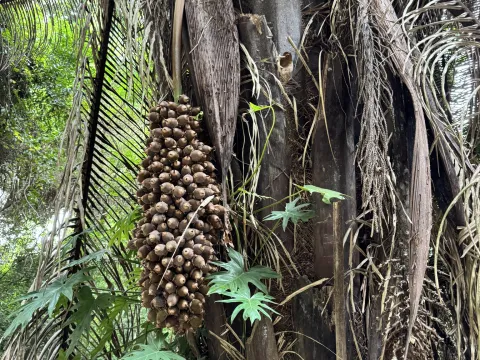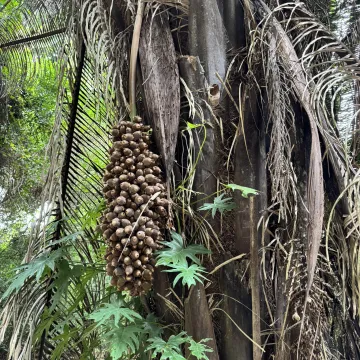
Attalea cohune
Attalea cohune Mart.
Description
Attalea cohune (Attalea cohune Mart.) is a majestic perennial palm belonging to the Arecaceae family. This species is highly regarded for its robust stature and its ability to produce oil-rich seeds, which have served as a valuable resource for both local communities and international markets for centuries.
The native habitat of this species is primarily located in Central America, specifically within countries like Belize, Mexico, and Honduras, extending into parts of South America. It thrives in lowland tropical rainforests characterized by high humidity and consistent rainfall. Nowadays, it is cultivated in various tropical regions that replicate these specific environmental conditions.
Botanically, Attalea cohune is a large palm, often reaching significant heights with a sturdy, single trunk. Its foliage consists of massive, arching pinnate leaves. The fruit consists of a hard, woody endocarp housing one or more oil-rich kernels. The plant is notably durable and can survive in diverse forest environments, though its productivity is maximized under specific agricultural management.
Optimal growth requires a tropical climate with high temperatures and no risk of frost. The palm prefers deep, well-drained, and nutrient-rich soils. In terms of agronomy, establishing a plantation requires careful spacing to ensure adequate light penetration. Soil fertility management, including the application of organic fertilizers and protection from waterlogging, is crucial for maintaining a healthy and profitable yield.
The economic utility of the Attalea cohune is extensive, primarily revolving around its oil-producing potential:
- Production of edible oils used in cooking and baking;
- Manufacturing of high-grade cosmetic products and soaps;
- Utilization of the dense shell for high-quality charcoal;
- Thatching and weaving materials derived from the long, durable fronds.
Like many palm species, Attalea cohune is susceptible to specific pests, most notably the palm weevil, which can damage the growing point of the plant. Pathological issues often involve root rot fungi when drainage is insufficient. Integrated pest management, focusing on plantation sanitation and the health of young seedlings, remains the primary approach for mitigating these risks in agricultural settings.
Photo gallery