Babiana nana
Babiana nana (Andrews) Spreng.
Description
Babiana nana is a charming bulbous perennial belonging to the Iridaceae family. Highly regarded in the ornamental industry for its dwarf habit, it produces striking, often fragrant blooms that are popular in specialized rock garden designs and container horticulture.
The species originates from the Cape region of South Africa, where it thrives in a Mediterranean climate. Due to these geographical origins, the plant is best adapted to regions with distinct, mild growing seasons, often requiring protection in colder climates to prevent frost damage to the corms.
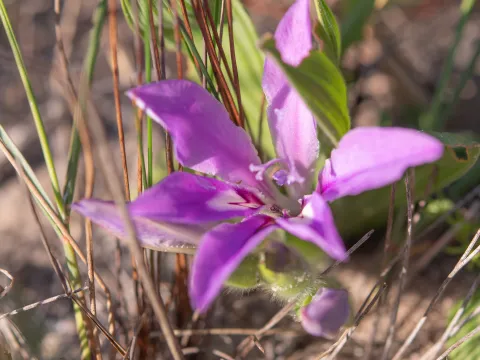
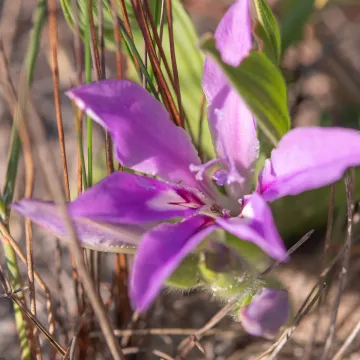
Botanically, the plant is characterized by its short, hairy leaves and a rounded corm protected by fibrous tunics. The flowers typically exhibit a vibrant array of colors, ranging from shades of blue to deep purple, and are arranged in compact, upright spikes that emerge from the center of the foliage.
Successful cultivation requires well-draining, sandy soil and a position in full sun to mimic its natural environment. The agrotechnology focuses heavily on water management; irrigation should be applied during the active growth period, while the corms must be kept dry during the dormant phase to prevent rot.
- Use in rock gardens or as terrace containers
- Requires soil with excellent drainage
- Sun-loving with moderate water needs
- Susceptible to root rot and sap-sucking pests
In terms of agricultural and horticultural use, Babiana nana serves primarily as a niche ornamental crop. Growers must be vigilant against common issues such as fungal bulb decay, which is often a result of over-irrigation, and persistent pests like aphids or spider mites which can affect plant vigor.
Photo gallery