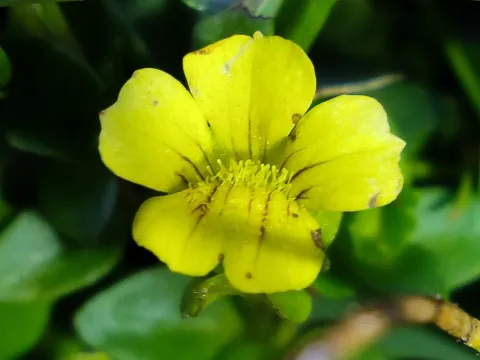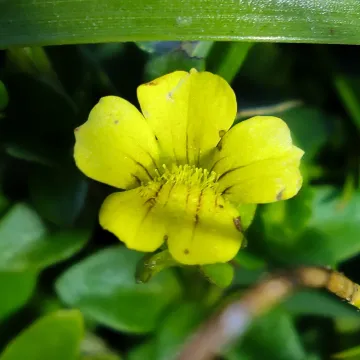
Bacopa dianthera
Bacopa dianthera
Description
Bacopa dianthera is a perennial herbaceous plant belonging to the Plantaginaceae family. Originally native to the tropical and subtropical regions of the Americas, this plant thrives in wetland environments, including riverbanks, marshes, and shallow water bodies, where it naturally forms dense, lush ground cover.
Botanically, Bacopa dianthera is characterized by its creeping or ascending stems that readily develop adventitious roots at the nodes. The leaves are typically opposite, small, and light green, providing a soft aesthetic appeal. The plant produces small, solitary axillary flowers, which are often white or pale, adding to its visual charm in both natural and managed settings.
When it comes to climatic requirements, this species favors warm temperatures and high levels of humidity. It is highly sensitive to desiccation, necessitating a substrate that remains consistently moist. It grows best in nutrient-rich, well-draining soils or directly within aquatic systems, provided there is adequate light exposure for photosynthesis.
The agricultural practice for cultivating Bacopa dianthera focuses on moisture management and nutrient supply. Regular monitoring of the substrate pH and temperature is essential for vigorous development. Propagation is primarily achieved through stem cuttings, which are easy to handle and demonstrate a high success rate in rooting when placed in favorable aquatic or damp conditions.
The primary economic use of this plant is within the fields of horticulture, landscaping, and aquarium science. It is highly valued as an oxygenating plant in aquaria and as a moisture-loving ground cover for damp garden areas, ponds, and paludariums. Its rapid growth rate makes it a preferred choice for covering large surfaces quickly.
- Requirement for constant soil moisture.
- Excellent adaptability to aquatic environments.
- Simple vegetative propagation via cuttings.
- Sensitivity to cold temperatures and frost.
- Ability to thrive in nutrient-rich damp soils.
Photo gallery