Bacopa eisenii
Bacopa eisenii
Description
Bacopa eisenii is a perennial herbaceous plant belonging to the Plantaginaceae family. It is a semi-aquatic species, well-adapted to swampy environments, riverbanks, and shallow water bodies. Its ability to survive in both submerged and emersed conditions makes it a highly versatile plant for agricultural nurseries specializing in hydroponic crops.
The native range of this species covers parts of North America, particularly California and Mexico. Currently, it is cultivated globally by commercial aquatic plant producers who supply the aquarium industry and landscaping sectors. The plant is prized for its reliability in various environmental setups, provided that certain growth parameters are strictly met.
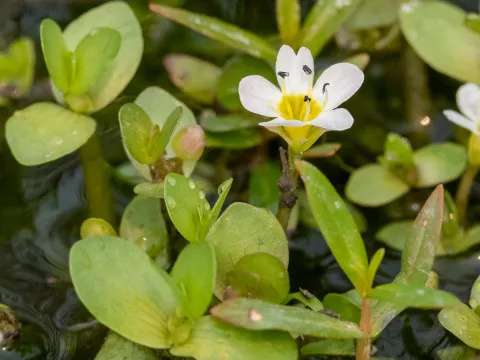
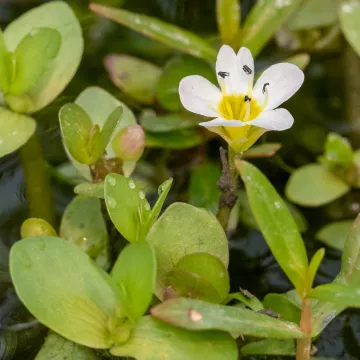
Botanically, Bacopa eisenii is characterized by creeping stems that root at the nodes and opposite, fleshy, bright green leaves. The plant exhibits structural plasticity, where leaf size and stem thickness can vary depending on the depth of the water and the intensity of light. This adaptation is a key feature of its survival strategy in fluctuating habitats.
Successful cultivation requires a nutrient-rich substrate and consistent moisture levels. In commercial production, hydroponic systems are preferred to ensure optimal nutrient uptake. Key maintenance requirements include intense lighting to prevent leggy growth and regular monitoring of water pH levels, which should ideally remain slightly acidic to neutral for the best development.
The primary economic use for Bacopa eisenii is within the aquarium trade and the landscaping of paludariums. Common pests include aphids when grown in the emersed form, while typical diseases usually stem from nutrient imbalances or insufficient light. Maintaining a stable environment is crucial for preventing leaf chlorosis and ensuring a healthy, vigorous growth cycle.
Photo gallery