Texas sage
Leucophyllum frutescens (Berland.) I. M. Johnst.
Description
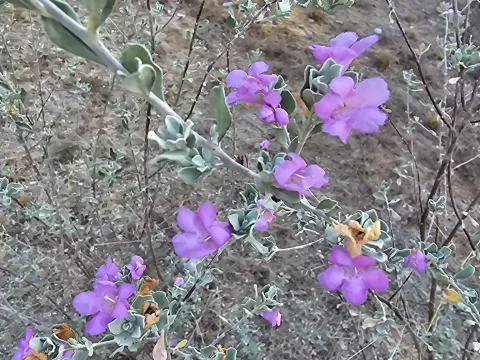
Texas sage, botanically classified as Leucophyllum frutescens, is a resilient shrub species belonging to the Scrophulariaceae family. It is widely recognized as a barometer bush due to its tendency to bloom profusely following periods of high humidity or rainfall, signaling changing weather conditions.
Originating from the arid regions of the southwestern United States and northern Mexico, this shrub has evolved to thrive in harsh environments. It is a staple in desert landscaping because it maintains its structural integrity and aesthetic appeal despite intense heat and prolonged water scarcity.
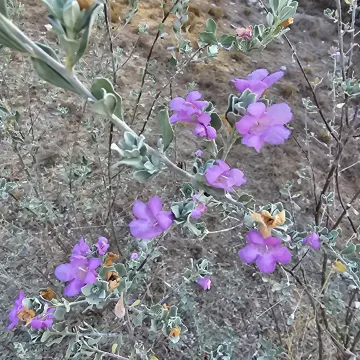
The plant features small, silvery-grey leaves covered in fine trichomes that reflect light and retain moisture. This adaptation is crucial for surviving high-temperature zones. During the blooming season, the shrub produces abundant, bell-shaped flowers that typically range from pale pink to deep purple hues.
Cultivation requires full sun exposure and well-draining soil, such as sandy or gravelly mixtures. The species is highly susceptible to root diseases if the soil remains waterlogged, so irrigation must be sparing. Pruning is typically performed after the blooming cycle to maintain a dense, compact shape.
Economically, it is highly valued for xeriscaping and sustainable horticulture. The plant is rarely bothered by serious pests or diseases, making it a low-maintenance solution for urban green spaces and large commercial landscapes in arid climates, reducing the need for chemical inputs.
- Heat and drought tolerance
- Distinctive silvery foliage
- Rapid bloom response to moisture
- Adaptable to poor soil
- Low susceptibility to pests
Photo gallery