Barrenwort
Epimedium grandiflorum C. Morren
Description
Barrenwort (Epimedium grandiflorum) is a low-growing perennial plant belonging to the Berberidaceae family. It is widely recognized in horticulture as a premier groundcover for shaded garden areas, valued for its delicate, winged flowers and attractive, heart-shaped foliage that provides visual interest throughout the growing season.
The native distribution of this species spans East Asia, including Japan, Korea, and China. In these regions, it naturally inhabits woodland floors, which dictates its preference for sites that offer protection from intense solar radiation and provide stable soil moisture throughout the spring and autumn periods.
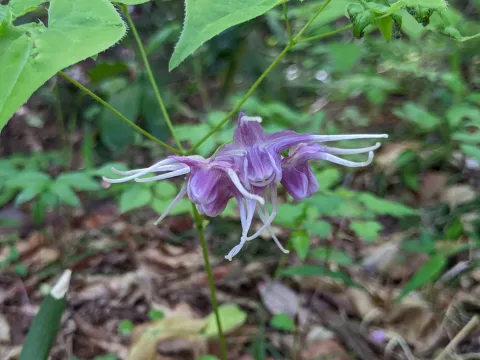
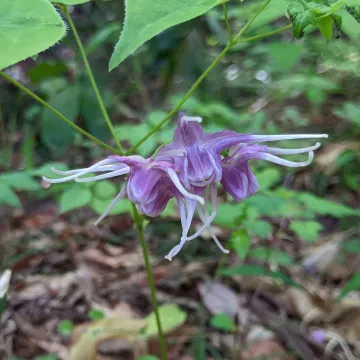
Botanically, it is a rhizomatous plant with wiry stems reaching up to 40 cm in height. The foliage often emerges with a bronze or reddish tinge in spring, maturing into a deep green. The inflorescences are distinct, featuring flowers with prominent spurs, appearing in colors ranging from white and yellow to deep violet, which stand out beautifully against the foliage carpet.
Agrotechnical requirements focus on site selection and soil amendment. The plant thrives in humus-rich, well-draining, slightly acidic soil. Regular organic mulching is recommended to maintain moisture levels and suppress weed growth. While it is quite drought-tolerant once established, supplemental irrigation is necessary during prolonged dry spells in summer to ensure optimal growth and flower production.
Economically and practically, Epimedium grandiflorum is used in landscape architecture as a maintenance-low cover for under-tree plantings. Additionally, it possesses historical significance in traditional medicine, where it is utilized for its potential therapeutic properties. Propagation is best achieved through division of the root clumps during the dormant season, ensuring reliable expansion of the planting area.
- Excellent shade tolerance for woodland garden designs.
- High degree of resistance to common garden pests and diseases.
- Exceptional longevity once established in appropriate soil conditions.
- Seasonal interest due to color-changing foliage and complex flower structure.
Photo gallery