Rattan vine
Berchemia scandens
Description
The Rattan vine (Berchemia scandens) is a vigorous deciduous woody vine belonging to the Rhamnaceae family. Known for its climbing habit, it naturally uses trees and shrubs as supports to reach sunlight in dense forest habitats. It is highly valued in botanical collections for its unique aesthetic appeal and rapid growth rate in favorable environments.
Originating from the southeastern United States, this species is typically found in moist woodlands, floodplains, and riverbanks. Its native range suggests a preference for regions with consistent soil moisture and moderate temperatures. Because of this origin, the plant thrives in areas where it can access groundwater, making it an excellent candidate for riparian buffer planting or shaded garden corners.
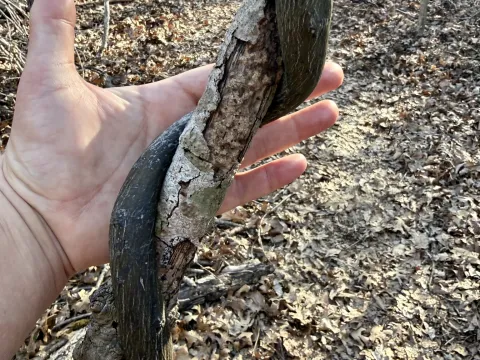
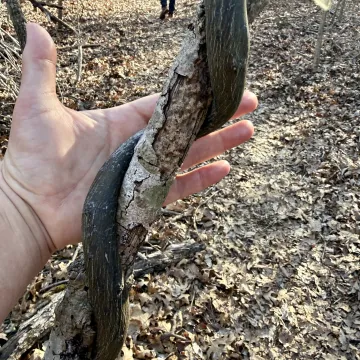
Botanically, the Rattan vine is characterized by its slender, flexible stems that can reach significant heights. Its leaves are alternate, elliptical, and feature prominent parallel veins, giving the foliage a distinct texture. In the spring, it produces small, yellowish-green flowers in terminal panicles, followed by drupe-like fruits that mature from green to a deep, glossy dark blue or black.
Cultivation requires fertile, well-draining soil rich in organic matter. While it tolerates partial shade, the plant performs best in sites with dappled light. Agrotechnical management involves regular moisture maintenance during the first few years of establishment. Providing a sturdy trellis or fence is essential, as the vine possesses a strong growth habit that may become heavy over time.
Beyond its ornamental value in landscaping as a screen or groundcover, the Rattan vine serves as a minor honey plant and provides food for local wildlife. It is generally resistant to major agricultural diseases, though it may occasionally suffer from leaf spot if drainage is poor or from spider mites during prolonged droughts. Proper site selection is the key to minimizing these issues.
Photo gallery