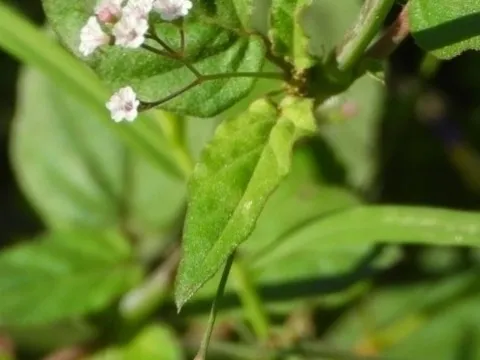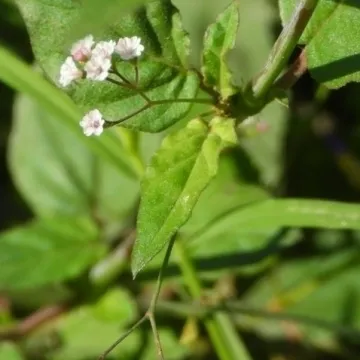
Erect spiderling
Boerhavia erecta L.
Description
Erect spiderling (Boerhavia erecta L.) is a herbaceous plant belonging to the Nyctaginaceae (Four o'clock) family. It typically grows as an annual or short-lived perennial, characterized by a substantial taproot and stems that can grow upright or spreading, reaching heights of up to one meter under favorable conditions.
Originating from the tropical and subtropical regions of the Americas, the plant has become a widespread weed across many parts of the globe. Due to its adaptability, it frequently colonizes cultivated fields, waste areas, and roadsides, often becoming a significant weed in various agroecosystems throughout the tropical zones.
Botanically, it is distinguished by opposite, often lanceolate leaves and tiny flowers arranged in panicles. The fruits are small, glandular-hairy achenes. These sticky hairs allow the seeds to adhere to animal fur or human clothing, facilitating rapid spread across new territories, which poses a challenge for agricultural land management.
Regarding cultivation and environmental requirements, the plant thrives in well-drained, sandy, or loamy soils and requires high solar radiation. It is remarkably drought-tolerant, surviving in harsh conditions where other vegetation might struggle. Effective weed management involves integrated strategies, such as mechanical weeding, mulching, and the application of pre- or post-emergence herbicides.
While often classified as a problematic weed in agriculture, the plant is valued in traditional medicine for its chemical profile. It contains bioactive compounds such as alkaloids, flavonoids, and phenols, which are subjects of ongoing pharmaceutical research. Common pests affecting it include various sap-sucking insects and leaf miners, although its resilience often keeps significant damage at bay.
Photo gallery