Common boneset
Eupatorium perfoliatum L.
Description
Common boneset (Eupatorium perfoliatum L.) is a perennial herbaceous plant belonging to the Asteraceae family. In agricultural practices, it is cultivated primarily as a medicinal crop and a valuable honey plant, appreciated for its resilience and high biological activity of its biomass.
The native range of the species is North America, specifically thriving in wetlands, damp thickets, and near water sources. As a crop, it requires specific environmental conditions that mimic its natural habitat, particularly regarding soil moisture availability and atmospheric humidity levels throughout the growing season.
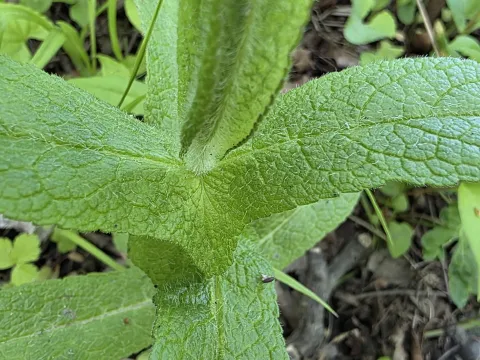
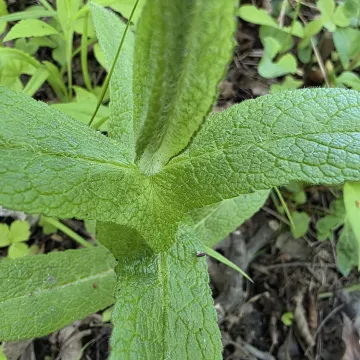
The botanical structure of the plant is distinctive, characterized by opposite leaves that unite at the base, creating an appearance of the stem piercing through them. The flowers are small, white, and clustered into dense, flat-topped terminal corymbs, which make the plant highly attractive to various pollinators.
Agronomic requirements center on rich, moist soils with a high organic content. Farmers should ensure consistent irrigation, as the plant does not tolerate drought. Planting density must be managed to allow for proper air circulation, which prevents the development of fungal diseases common in damp, crowded environments.
Commercially, the plant is harvested for its aerial parts, which contain specific flavonoids and polysaccharides used in phytotherapy. Beyond its medicinal utility, it serves as an excellent nectar source for bees, significantly contributing to the pollination services on farms that integrate sustainable ecological practices.
- High moisture requirement
- Neutral to slightly acidic soil preference
- Propagated via seeds or root division
- Requires protection from intense summer drought
When it comes to pests and diseases, the common boneset is susceptible to powdery mildew and aphid infestations if growing conditions are poor. Proper crop management, including regular weeding and ensuring sufficient spacing, remains the most effective strategy for maintaining high yield quality and plant health.
Photo gallery