
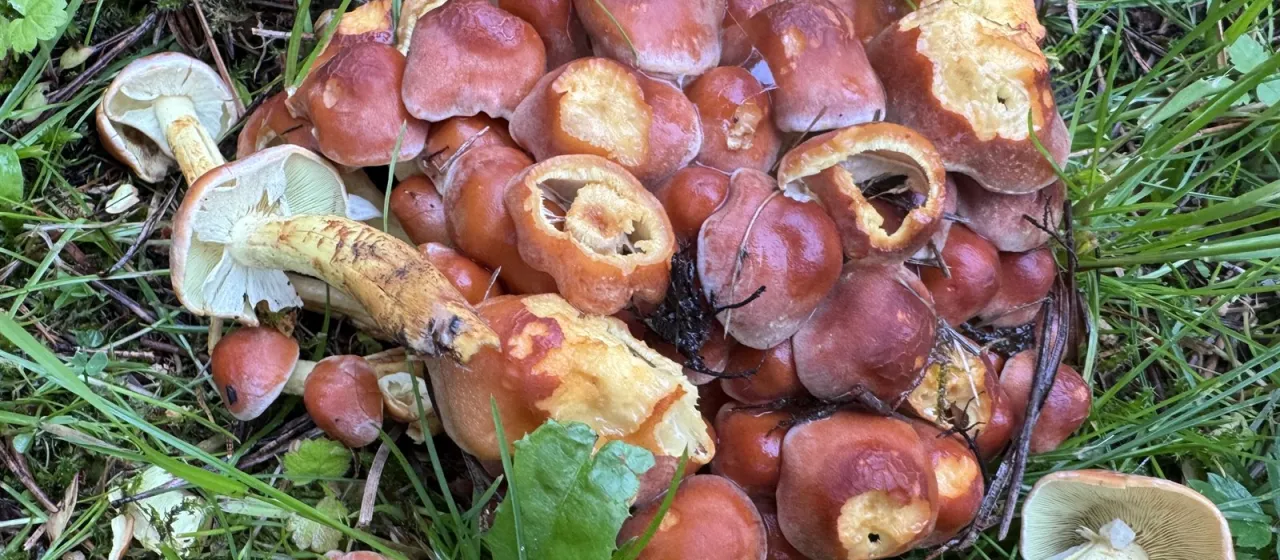
Description
Brick Tops (scientific name Naematoloma sublateritium) are edible mushrooms belonging to the Strophariaceae family. Known for their characteristic brick-red caps and dense clusters, they have become a niche but growing interest in commercial mushroom farming due to their robust flavor profile and ease of cultivation on woody substrates.
The species originates from the forest ecosystems of the Northern Hemisphere, where it thrives as a saprotrophic fungus on decaying wood. In modern agriculture, it is cultivated globally by utilizing both log inoculation techniques and controlled substrate blocks, effectively mimicking its natural habitat within indoor climate-controlled environments.
Botanically, the fungus is distinguished by its orange-red to reddish-brown caps and crowded, adnate gills that shift from yellowish to purplish-gray as the spores mature. Its growth habit in large, dense clusters is a defining feature that allows for efficient harvesting cycles in agricultural settings.
Cultivation requirements necessitate high levels of humidity, ideally between 85% and 90%, and consistent ventilation. Unlike many saprotrophic fungi, Brick Tops require a specific temperature drop to trigger pinning, usually around 15°C. Proper preparation of the substrate, which should consist of hardwood chips or logs, is vital to prevent contamination and ensure nutrient density.
Maintaining crop health requires strict adherence to hygiene standards to avoid the following issues:
- Trichoderma mold contamination;
- infestation by fungus gnats;
- bacterial blotch caused by excess surface moisture.