Brush cherry
Syzygium paniculatum Banks ex Gaertn.
Description
Brush cherry (Latin: Syzygium paniculatum) is an evergreen tree or large shrub belonging to the Myrtaceae family. This species is widely recognized for its dense, glossy green foliage, showy white flowers, and edible purple fruit. Due to its dense branching habit, it is commonly utilized in landscaping as a topiary, screen, or formal hedge.
The plant originates from the coastal regions of eastern Australia, particularly Queensland and New South Wales. In agricultural and horticultural contexts, it is grown in frost-free regions or in containers in cooler climates. Its adaptation to various soil types, provided they are well-draining, makes it a versatile species for both amateur and professional gardeners.
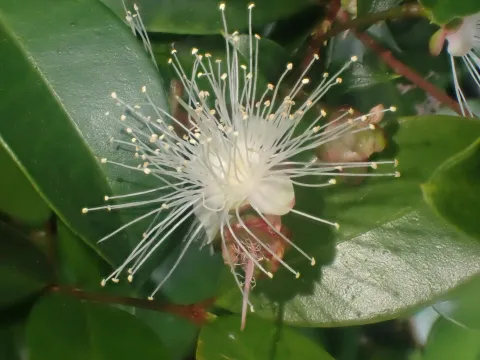
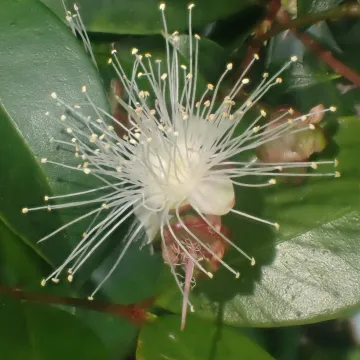
Botanically, the plant is characterized by opposite leaves with oil glands, which are common for the Myrtaceae family. The flowers appear in panicles, developing into spherical, purple-red fruits that are edible, often used for jams or jellies. The plant grows relatively quickly when provided with ample water and moderate temperatures, typically reaching several meters in height if left unpruned.
Agricultural requirements for Syzygium paniculatum include a position in full sun to partial shade. The soil should be kept consistently moist but never waterlogged to avoid root rot. Fertilizer application during the active growing season is recommended to support continuous leaf development. In colder climates, the plant must be protected from frost or moved indoors to prevent tissue damage.
Common pest issues include scale insects, aphids, and spider mites, which can be managed with biological or chemical control methods. Fungal diseases such as leaf spot or root rot are typically associated with poor drainage or poor air circulation. Regular pruning not only helps in maintaining the desired shape but also increases air penetration within the canopy, reducing the risk of disease.
- Excellent tolerance for heavy pruning and shaping.
- Edible fruit used in local culinary traditions.
- High aesthetic value in landscaping and interior design.
- Requires consistent maintenance to thrive in non-native climates.
Photo gallery