
Sickle-leaf hare's ear
Bupleurum scorzonerifolium Willd.
Description
Sickle-leaf hare's ear (Bupleurum scorzonerifolium Willd.) is a perennial herbaceous plant belonging to the Apiaceae family. It is a highly valued medicinal crop traditionally used in Asian medicine for its hepatoprotective, anti-inflammatory, and immune-modulating properties, primarily derived from its secondary metabolites.
The plant originates from the regions of East Asia, including Siberia, Mongolia, China, and the Korean Peninsula. It is typically found in meadow steppes, dry slopes, and forest edges. Due to its natural adaptation to harsh continental climates, it exhibits significant cold hardiness and the ability to withstand extended periods of drought.
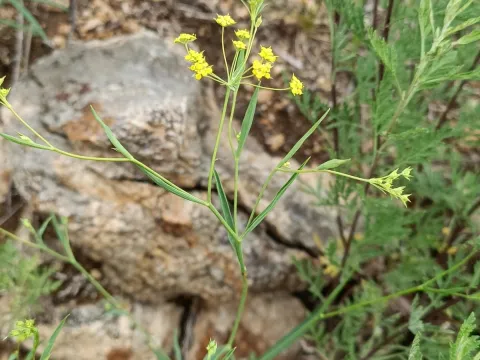
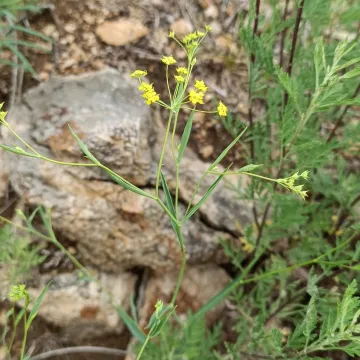
Botanically, it is characterized by a taproot system and erect, smooth stems reaching 30–80 cm in height. The foliage is linear and often slightly curved, resembling a sickle. The yellow flowers are arranged in compound umbels, which serve as the primary reproductive structures. The seeds are small and require specific stratification conditions for optimal germination rates in field settings.
Regarding agronomic requirements, the crop thrives in well-drained, sandy or loamy soils with a neutral pH level. It demands full sun exposure to maximize the accumulation of active compounds. While it is highly drought-tolerant once established, providing adequate moisture during the seedling stage is critical for successful stand establishment and early development.
In terms of production, managing pests such as aphids and preventing fungal diseases like powdery mildew are the most critical tasks for farmers. Proper spacing between rows is essential to ensure adequate airflow, which helps mitigate moisture-related diseases. Harvest usually takes place during the flowering stage, when the concentration of medicinal compounds in the aerial parts is at its peak.
Photo gallery