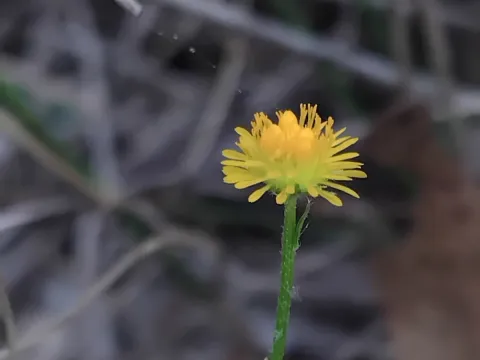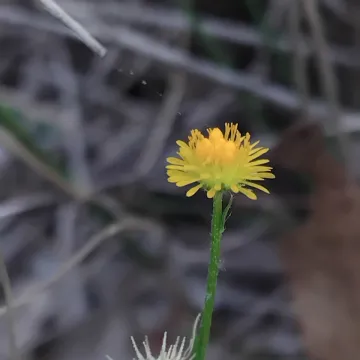
Yellow burr-daisy
Calotis lappulacea
Description
Yellow burr-daisy (Calotis lappulacea) is a herbaceous plant belonging to the Asteraceae family. While primarily found as a wild component of pastures, it plays a notable role in the ecology of rangelands, particularly in its native Australian habitats where it serves as part of the natural vegetation cover.
The plant originates from Australia and is widespread across various semi-arid regions. It is well-adapted to environments that experience significant fluctuations in precipitation, allowing it to thrive in landscapes where more sensitive forage crops might fail to establish.
Botanically, the plant is characterized by its yellow flower heads and a distinct growth habit involving tough stems. The most defining feature is the presence of prickly burrs (seeds) that attach to animal fur, which acts as a primary dispersal mechanism across large agricultural areas.
Regarding agrotechnical requirements, Calotis lappulacea prefers well-drained soils and is highly tolerant of poor soil fertility. It exhibits high resilience to grazing pressure, although it is often managed as a nuisance weed in sheep-farming regions because the burrs significantly degrade wool quality.
- High resilience to drought conditions.
- Effective seed dispersal via animal vectors.
- Adaptation to various soil types including sandy loams.
- Competitive growth habit in open grasslands.
In terms of agricultural use, it provides some forage value, especially in its young state, though its utility is offset by the burrs. Common pests and diseases are rarely a major issue for this hardy species, though it may occasionally be affected by generalist fungal pathogens under stagnant moisture conditions.
Photo gallery