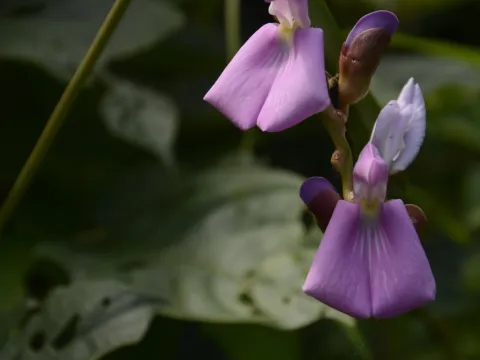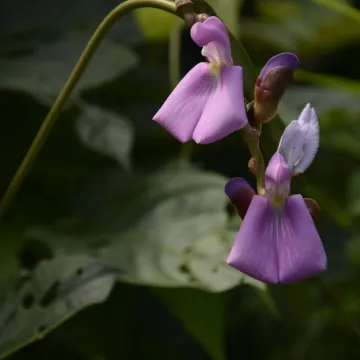

Jack bean
Canavalia ensiformis (L.) DC.
Description
Jack bean (Canavalia ensiformis) is a vigorous annual legume species within the Fabaceae family. Known for its robust growth habit, it is widely utilized in tropical and subtropical agriculture as a cover crop, green manure, and supplementary animal fodder.
Originating from the tropical regions of the Americas, the jack bean is now cultivated globally across Africa, Asia, and the southern United States. Its adaptability to diverse soil types and environmental resilience makes it a favored plant for sustainable land management and soil fertility improvement.
Botanically, it features a semi-erect or vining growth habit with large, trifoliate leaves. The plant produces large, sword-shaped pods that contain several white, oval seeds. Its root system is extensive and highly efficient at nitrogen fixation, which significantly enhances the nutritional status of the soil for subsequent crops.
The crop thrives in warm climates and requires ample sunlight for optimal development. While it shows remarkable tolerance to drought, it performs best in well-drained soils with a balanced pH. The agronomic practice involves sowing during the warm season, ensuring the soil is sufficiently warm for germination and initial establishment.
Economically, the jack bean is valued for its ability to produce significant biomass, which effectively shades the soil and prevents weed proliferation. While the seeds are highly nutritious, they contain compounds that require heat treatment or fermentation before they can be safely consumed by livestock. Disease management is critical, as the plant can be susceptible to root rot and fungal pathogens if drainage is poor.
- Excellent weed suppression
- Soil nitrogen enrichment
- Erosion control properties
- High biomass production
- Adaptability to poor soils
Photo gallery