Cassinia vauvilliersii
Cassinia vauvilliersii
Description
Cassinia vauvilliersii is a perennial evergreen shrub belonging to the Asteraceae family. Known for its dense, rounded growth habit, this plant provides year-round structure in garden settings. It typically reaches a mature height of one to two meters, making it a versatile choice for hedging and ornamental foundation planting in suitable climates.
The species is native to New Zealand, where it is commonly found in subalpine scrublands and forest margins. This origin explains its inherent resilience to harsh conditions, including high winds and cold exposure. As an agricultural and ornamental crop, it has been successfully adapted in various regions with temperate marine climates, where it thrives in well-lit, open environments.
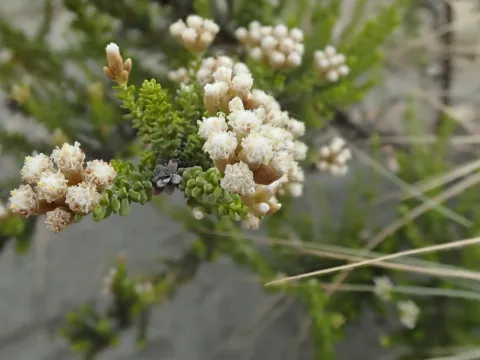
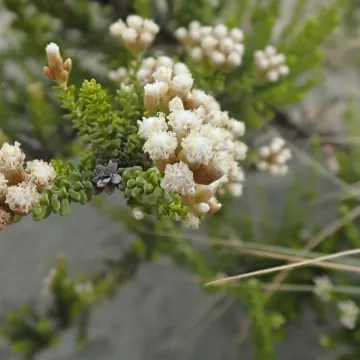
Botanically, the plant is characterized by small, leathery leaves with a distinct silvery or olive-toned pubescence on the underside. The flowers appear in terminal, corymbose clusters, displaying creamy-yellow hues during the summer months. These blossoms are known for attracting various pollinators, adding ecological value to the landscape beyond mere aesthetic appeal.
Cultural requirements emphasize the importance of excellent soil drainage. Cassinia vauvilliersii prefers light, slightly acidic soil conditions and will struggle significantly in waterlogged environments. Maintenance practices should focus on annual pruning to maintain a compact shape and prevent woodiness in the lower branches, along with choosing a site that receives full sun to partial shade.
Primary landscape and horticultural uses include:
- Establishing wind-resistant hedgerows in coastal landscapes.
- Serving as a structural specimen in Mediterranean-style gardens.
- Use in rockeries or as part of mixed shrub borders.
- Providing year-round green texture in ornamental plant collections.
Regarding pest and disease management, the most frequent issues are root pathogens caused by poor drainage and aphid infestations on new growth during dry spells. Management strategies involve prioritizing soil aeration and implementing regular monitoring to catch infestations early. Proper site selection usually eliminates the majority of health issues for this hardy species.
Photo gallery