Indian paintbrush
Castilleja angustifolia
Description
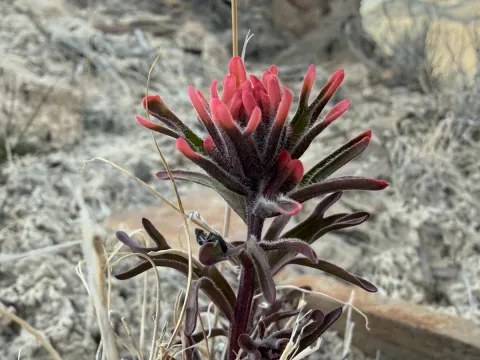
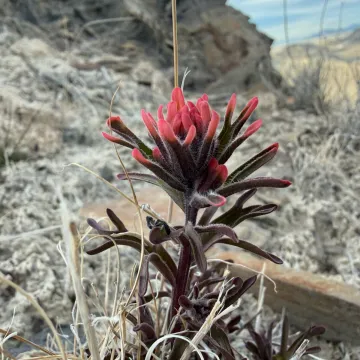
Indian paintbrush (Castilleja angustifolia) is a distinctive herbaceous perennial plant belonging to the Orobanchaceae family. This species is categorized as a hemiparasite, meaning it relies on the root systems of neighboring host plants to supplement its water and nutrient intake while still performing photosynthesis to generate energy.
The native range of Castilleja angustifolia extends across western North America, thriving in diverse environments such as open prairies, dry hillsides, and rocky meadows. It is highly adapted to semi-arid climates, demonstrating significant resilience to seasonal water scarcity and temperature fluctuations common in its geographical distribution.
Botanically, the plant is renowned for its vibrant, showy bracts that surround the small, tubular flowers. These bracts, often ranging in color from deep scarlet to bright orange-red, are evolutionarily designed to attract pollinators like hummingbirds. The foliage consists of narrow, lance-shaped leaves that contribute to the plant's structural resistance to dry, windy conditions.
Cultivation requirements for this species are unique due to its parasitic nature. Success in gardens depends on:
- Selection of appropriate host species to sustain the plant.
- Well-drained, nutrient-poor soil that mimics rocky or dry habitat conditions.
- Exposure to full sunlight to maximize photosynthetic potential.
- Avoidance of over-irrigation to prevent root rot.
The primary horticultural use of Indian paintbrush is in naturalistic landscaping and the restoration of native plant habitats. While it is rarely grown as a large-scale agricultural crop, its ecological value in maintaining pollinator populations is high. Typical diseases include root pathogens linked to poor drainage, while susceptibility to pests is generally low compared to conventional agricultural varieties.
Photo gallery