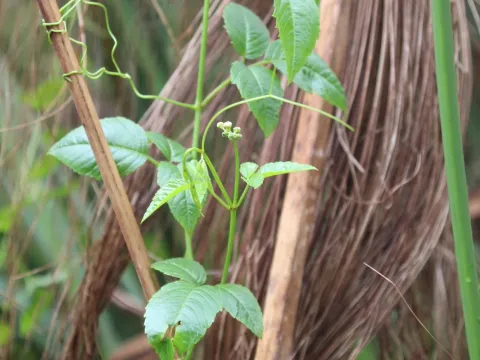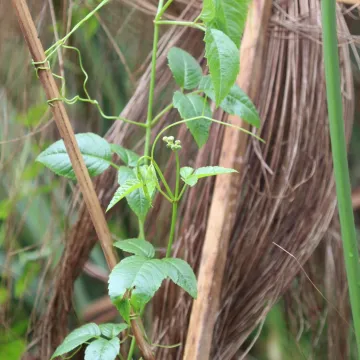

Cayratia ibuensis
Cayratia ibuensis
Description
Cayratia ibuensis is a perennial climbing plant belonging to the Vitaceae family. This species is native to the tropical regions of Africa, where it thrives as a vigorous vine, utilizing its specialized tendrils to climb and cover vertical structures in its natural forest or savanna habitats.
The botanical structure of the plant features palmately compound leaves with serrated margins, which are characteristic of the grape family. The plant possesses a robust root system, often including thickened tubers that serve as reservoirs for nutrients and water, allowing the plant to persist through seasonal dry spells encountered in its native environment.
Its natural range encompasses various tropical zones in West and Central Africa. The species favors areas with abundant sunlight, though it remains shade-tolerant when necessary. Optimal growth conditions involve high ambient temperatures and well-drained, nutrient-rich soil, which supports the rapid biomass accumulation typical of this climbing vine.
Agricultural management for Cayratia ibuensis centers on providing adequate structural support for vertical growth. Cultivation practices include regular irrigation during dry periods and the maintenance of soil fertility through organic amendments. Pruning may be necessary to manage its rapid spread and encourage better foliage development, especially in controlled environments.
The economic and practical uses of the plant are primarily medicinal, with traditional practices valuing its extracts for various health-promoting properties. While not a major commercial crop, it is cultivated in small-scale setups for local use. Key pests include aphids and mites, while fungal infections can occur if the humidity levels are not managed properly, necessitating good air circulation around the plants.
Photo gallery