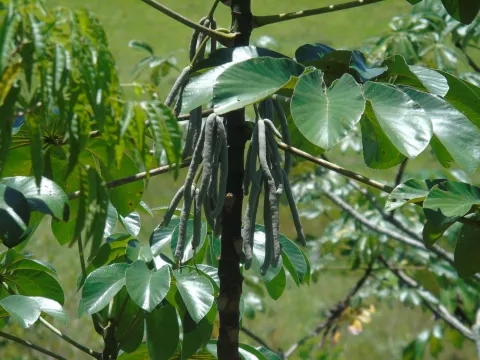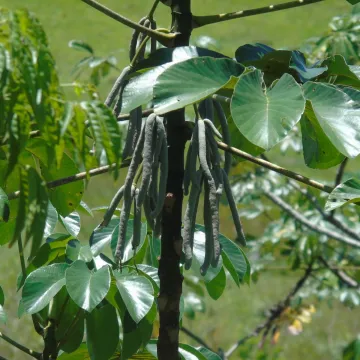
Cecropia lyratiloba
Cecropia lyratiloba
Description
Cecropia lyratiloba is a fast-growing tropical tree belonging to the Urticaceae family. As a quintessential pioneer species, it excels in colonizing degraded land, playing a crucial role in ecological succession and soil stabilization in tropical environments.
Native to South America, particularly coastal regions of Brazil, the species thrives in warm, humid climates. It is highly adapted to tropical forests and secondary vegetation areas, where it rapidly establishes itself by outcompeting other species for sunlight in open, disturbed habitats.
Botanically, the plant is characterized by its hollow stems and large, deeply palmate leaves. This structure allows for an exceptionally rapid rate of photosynthesis and biomass accumulation, making it a highly efficient biological resource for reforestation and soil restoration projects.
Agricultural requirements focus on full sun exposure and well-drained soils. While the tree is hardy in poor substrates, maintaining soil aeration is vital to prevent root rot. It is relatively resistant to many common pests, often benefiting from its mutualistic association with ants that inhabit its hollow stems.
The economic and practical utility of Cecropia lyratiloba includes the production of light-weight timber and raw materials for the paper industry. Furthermore, it is increasingly utilized in agroforestry systems to provide shade for sensitive crops and to improve soil structure through the continuous deposition of leaf litter.
Photo gallery