
Ceratopteris pteridoides
Ceratopteris pteridoides
Description
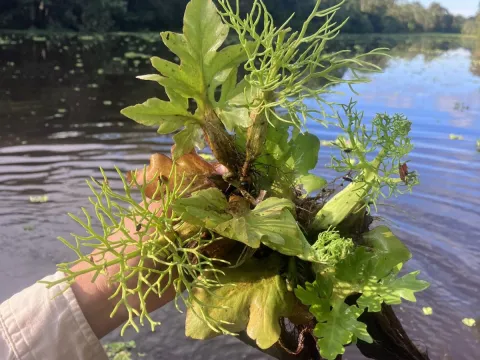
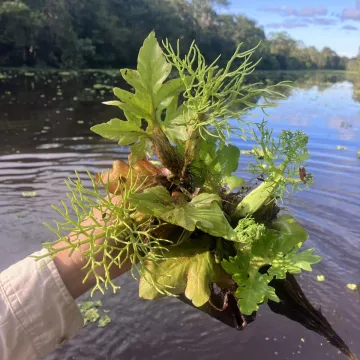
Ceratopteris pteridoides is a specialized floating aquatic fern belonging to the Pteridaceae family. Often referred to as the floating antler fern, this plant is uniquely adapted to life on the water's surface, where it develops a sprawling, delicate rosette of leaves that effectively filter water and provide structural diversity to aquatic ecosystems.
The native range of this species encompasses the tropical and subtropical regions of the Americas, specifically spanning from the southern United States through the Caribbean to South America. It typically thrives in stagnant or slow-moving water bodies, such as swamps, marshes, and seasonal floodplains, where it exploits nutrient-rich water to support rapid growth cycles.
Botanically, the species is characterized by its heterophylly, producing both sterile, broad, leaf-like fronds and narrower, fertile fronds that contain spores along their margins. The root system is adventitious and hangs freely in the water column, absorbing nutrients directly from the environment. The plant possesses high regenerative capabilities, allowing it to propagate through vegetative offsets or spore dispersal.
Cultivation requirements for this fern include warm water temperatures ranging from 22°C to 28°C and moderate to high light intensity. It is an undemanding species in terms of substrate, as it remains buoyant, but it requires regular nutrient supplementation in the water column to prevent deficiency-related chlorosis. It performs best in environments with minimal surface turbulence.
Host-use applications of Ceratopteris pteridoides extend to ornamental water gardening, aquarium hobbyist setups, and bio-remediation projects where it helps sequester nitrogen and phosphorus from wastewater. While it is generally hardy, it can be susceptible to aphids if kept in environments with low humidity. Typical issues include stunted growth during periods of light deprivation or micronutrient deficiencies.
Photo gallery