Littleleaf mountain mahogany
Cercocarpus intricatus
Description
Littleleaf mountain mahogany (Cercocarpus intricatus) is a unique evergreen shrub belonging to the Rosaceae family. It is widely recognized in agronomic circles for its extreme hardiness and ability to thrive in challenging environments where few other woody plants can survive.
Native to the southwestern United States, this species is typically found in arid mountain ranges, rocky canyons, and limestone cliffs. Its evolutionary history in desert-like conditions has endowed it with remarkable mechanisms for water conservation and nutrient uptake in alkaline, rocky, and low-fertility soils.
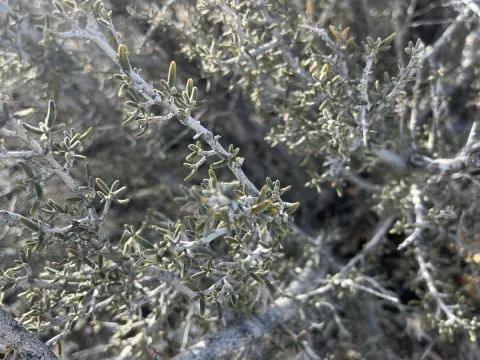
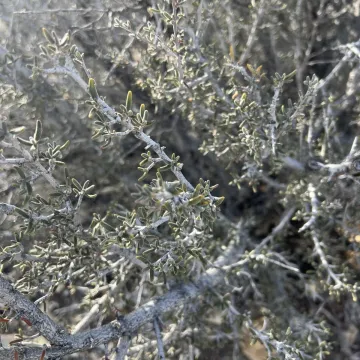
The botanical architecture of the plant is characterized by a dense, intricate branching pattern, which provides both a structural appeal and a protective habitat for wildlife. The leaves are small, narrow, and often resinous, aiding in water retention. Its fruit features a feathery plume that facilitates efficient seed dispersal by wind across open, rugged landscapes.
Successful cultivation of Cercocarpus intricatus requires mimicking its native habitat. Key agricultural requirements include high soil permeability, excellent drainage, and full sun exposure. Gardeners and land managers must avoid over-watering, as the species is highly susceptible to root-related pathogens and fungal infections if the substrate remains saturated for extended periods.
The economic and ecological importance of this shrub includes soil stabilization in erosion-prone areas and its role in xeriscaping, a water-conserving landscaping practice. While generally robust, the plant can be affected by specific insects like leaf beetles or mites, but it rarely requires significant chemical interventions if planted in appropriate, well-ventilated locations.
Photo gallery