Bamboo Palm
Chamaedorea seifrizii Burret
Description
The Bamboo Palm (Chamaedorea seifrizii) is a perennial, clumping palm species belonging to the Arecaceae family. It is widely recognized for its thin, reed-like, bamboo-style stems that create dense clusters. This palm is highly regarded in the professional landscaping industry for its hardiness, attractive foliage, and ability to thrive in interior environments with limited natural light.
Originating from the tropical rainforests of Mexico, Belize, and Guatemala, the plant is naturally adapted to the humid, shaded understory of dense forests. This evolutionary background explains its preference for filtered light and stable moisture levels, making it a reliable choice for indoor environments that would be unsuitable for more demanding tropical species.
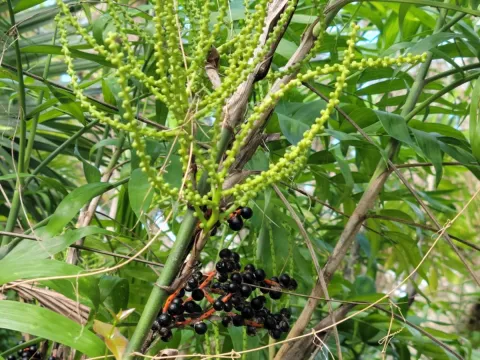
Botanically, the Bamboo Palm features dark green, feathery pinnate leaves that arch gracefully from the bamboo-like stalks. As a dioecious plant, it produces distinct male and female inflorescences. While it can reach significant heights in its native habitat, in decorative pots, it generally remains at a manageable size, making it a perfect architectural element for commercial and residential spaces.
Cultivation requires a well-draining, peat-based potting mix that retains moisture without becoming waterlogged. The key to successful agronomy for this species is a consistent but moderate watering schedule, avoiding both complete desiccation and prolonged soggy conditions. Fertilization should be focused on the growing season, using a balanced fertilizer specifically formulated for ornamental palms.
The Bamboo Palm is extensively used in the hospitality and corporate sectors for interior landscaping. Its high tolerance for low light and effectiveness in improving indoor air quality make it a staple in modern biophilic design. Furthermore, it is relatively easy to propagate through division, which allows for cost-effective expansion of plant collections in large facilities.
- Spider mites thrive in dry indoor conditions.
- Scale insects may infest the leaf stalks and stems.
- Root rot caused by overwatering or poor drainage.
- Mealybugs occurring in protected foliage areas.
Photo gallery