Prostrate Spurge
Chamaesyce preslii
Description
Prostrate Spurge (Chamaesyce preslii), often synonymous with certain varieties of Euphorbia, is an annual herbaceous plant belonging to the Euphorbiaceae family. In an agricultural context, it is widely recognized as a problematic weed that competes aggressively with commercial crops for nutrients, water, and essential sunlight, necessitating proactive management strategies.
Originating from North America, this species has successfully naturalized across various global regions, thriving in disturbed soil environments. Its range includes cultivated fields, pastures, and industrial areas, where it utilizes its flexible growth habits to establish itself quickly after soil tillage or other agricultural interventions.
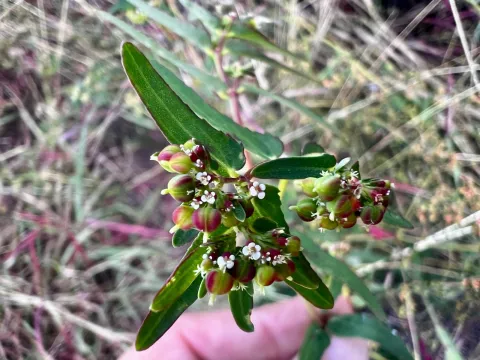
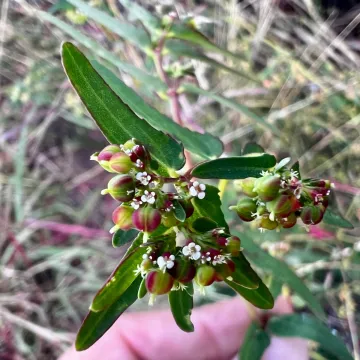
Botanically, Chamaesyce preslii is characterized by its branching stems that can grow up to 60 centimeters, often featuring opposite leaves with distinct central markings. A key identifying trait is the milky, toxic latex contained within its stems and foliage, which serves as a defense mechanism against herbivores. The root system is primarily taproot-based, allowing the plant to remain resilient during periods of drought.
The plant demonstrates a strong preference for well-drained soils and high-light conditions. Agronomic management involves a combination of mechanical weeding, such as timely shallow cultivation to disrupt the root system, and the application of pre-emergent or post-emergent herbicides. Because the plant produces seeds rapidly, early intervention is critical to preventing long-term infestation in a field.
Economically, the presence of this weed is largely detrimental. Beyond direct competition with crops, its toxicity poses a significant risk to livestock if ingested in significant quantities from pastures or contaminated hay. Furthermore, it serves as a potential host for various pests and pathogens that can eventually transfer to neighboring valuable agricultural crops.
- High seed production capacity
- Toxic latex content
- Deep taproot for drought tolerance
- Rapid growth in disturbed soil
Photo gallery