Cheilanthes tinaei
Cheilanthes tinaei
Description
Cheilanthes tinaei is a perennial spore-bearing plant belonging to the Pteridaceae family. Known for its distinct resilience, this species is frequently cultivated as an ornamental plant, prized by horticulturists for its ability to thrive in conditions that would be unsuitable for most other moisture-loving ferns.
Originating from the Mediterranean region and North Africa, this species naturally inhabits rocky outcrops and arid slopes. Its evolution in such challenging environments has granted the plant a unique physiological adaptation to low-water availability, allowing it to survive in habitats with poor soil quality and high sunlight exposure.
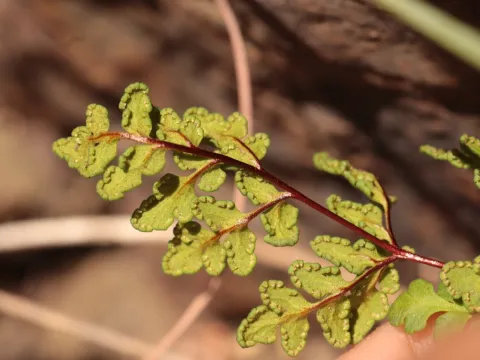
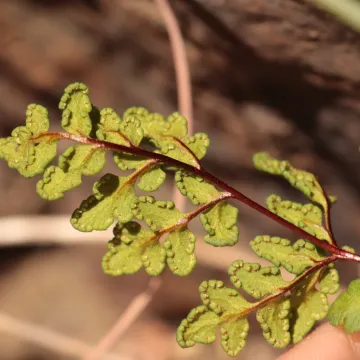
Botanically, Cheilanthes tinaei is characterized by its small, finely divided fronds which are often covered in small trichomes or scales. This dense covering is a protective mechanism that helps the plant regulate moisture loss through transpiration and provides insulation against thermal stress during intense heat.
Cultivation requirements for this species are specific and differ from typical greenhouse ferns. The primary concern is drainage; the potting mix must be highly porous, typically composed of soil, sand, and gravel. Irrigation should be applied strictly at the soil surface, as overhead watering can lead to fungal rot in the delicate foliage.
In terms of agricultural and horticultural use, it serves as an excellent candidate for xeriscaping or rock garden designs. While generally robust, the plant is susceptible to common pests such as scale insects and mealybugs, especially in indoor environments with limited airflow. Regular monitoring and maintaining a dry, well-ventilated atmosphere are essential for plant longevity.
Photo gallery