Wild jasmine
Chrysojasminum fruticans
Description
Wild jasmine (botanical name Chrysojasminum fruticans) is a perennial shrub belonging to the Oleaceae family. Distinct from the common garden jasmine, this species is valued for its resilient nature and bright yellow floral display. It typically forms a dense, bushy structure with flexible, olive-green stems that are highly adaptable to various environmental stresses.
The plant originates from the Mediterranean basin, the Caucasus, and Western Asia. Throughout its history, it has been recognized for its ability to thrive in poor, rocky soils where other vegetation struggles to survive. This natural adaptation makes it an excellent candidate for xeriscaping and ecological restoration projects in arid climates.
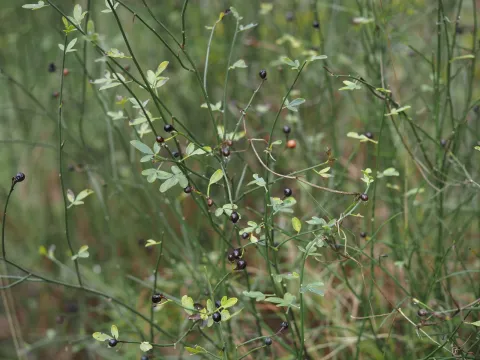
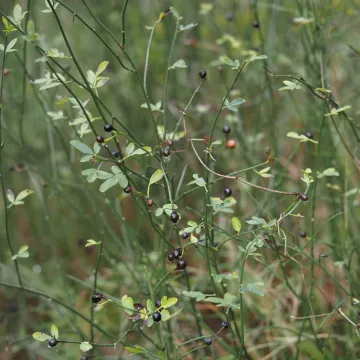
Botanically, Chrysojasminum fruticans is characterized by its trifoliate, alternate leaves and distinctive tubular, yellow flowers that appear in spring and early summer. The plant produces small, spherical black berries containing seeds. These seeds are essential for propagation, although vegetative propagation via cuttings is frequently used in commercial horticulture to maintain specific traits.
Agricultural and horticultural requirements for this species include full sun exposure and well-draining soil. It is notably drought-tolerant once established. However, to maintain a vigorous aesthetic appearance, it is recommended to practice annual pruning. This practice helps to manage the growth habit, promote denser foliage, and remove any damaged wood accumulated during the winter season.
The practical applications of this species are diverse, primarily focused on environmental and ornamental utility:
- Erosion control on sloped landscapes and embankments.
- Foundation plantings that require minimal water.
- Ornamental hedges in Mediterranean-style garden designs.
- Restoration of degraded shrublands due to its hardiness.
Photo gallery