Chrysopogon aciculatus
Chrysopogon aciculatus (Retz.) Trin.
Description
Chrysopogon aciculatus is a perennial grass belonging to the Poaceae family. Known in many regions as a persistent weed, it possesses significant biological traits that allow it to adapt to diverse ecological conditions. It forms dense, mat-like colonies, which serve as an effective ground cover in tropical and subtropical regions.
Originating from tropical Asia, the species has spread across the Pacific Islands and various other regions. It is typically found in open fields, roadsides, and abandoned agricultural lands. Its ability to colonize degraded soils makes it a survivor in environments where other grass species struggle to establish due to nutrient depletion.
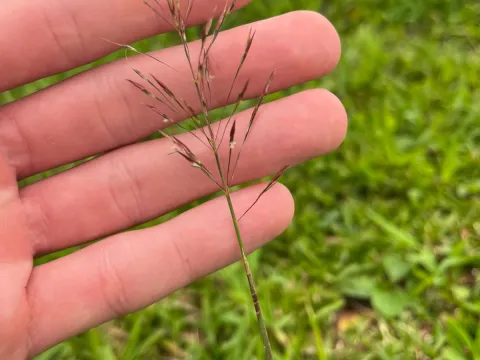
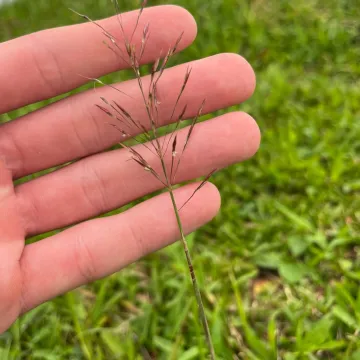
Botanically, this plant is characterized by its prostrate habit and short, rigid leaves. The inflorescence is a panicle bearing spikelets with sharp, needle-like awns. These awns serve as a dispersal mechanism, allowing the seeds to attach easily to clothing and animal fur, which often results in the plant being spread unintentionally over long distances.
Regarding cultivation and soil requirements, Chrysopogon aciculatus thrives in a wide range of soil types, including acidic and nutrient-poor soils. It is highly drought-tolerant, which allows it to persist during dry seasons. Management usually involves preventing seed set through timely mowing or the application of selective herbicides to protect more sensitive crops in proximity.
- Potential use for soil erosion control on steep slopes.
- Limited value as livestock fodder during the early vegetative stage.
- High efficiency in reclaiming compacted or degraded lands.
The plant exhibits high resistance to common pathogens, making it a robust competitor in the field. Pests are rarely a major issue, but under conditions of extreme moisture, fungal infections may appear. Agronomic management focuses on preventing the plant's spread into productive fields, utilizing integrated pest management strategies to ensure long-term sustainability.
Photo gallery