Gray's golden saxifrage
Chrysosplenium grayanum
Description
Gray's golden saxifrage (Chrysosplenium grayanum) is a perennial herbaceous plant belonging to the Saxifragaceae family. Known for its creeping habit, this plant thrives in moist, shaded environments, making it a specialized choice for gardeners looking to cover damp, low-light patches. While not a conventional agricultural crop, it is highly valued in the horticultural trade for its resilience in specific microclimates.
Originating from the Far East, specifically Japan, this species is naturally adapted to temperate climates with consistent moisture. Its native habitat consists of cool, forest floor areas where shade and consistent soil humidity are standard. In cultivation, it requires a environment that replicates these conditions to thrive and spread effectively across the garden floor.
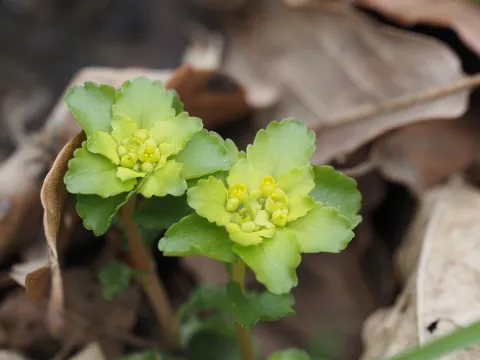
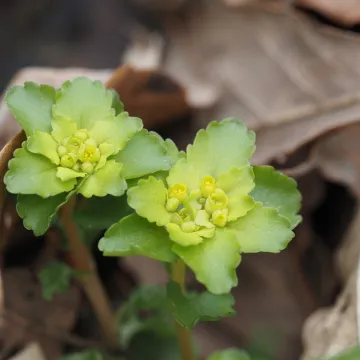
Botanically, the plant features succulent, creeping stems and round, crenate-edged leaves. Its root system is shallow, allowing it to form dense mats. During the spring, it produces small, inconspicuous yellow-green flowers that are framed by bright, showy bracts, which are the main source of its visual appeal. This structure provides a lush, carpet-like texture to garden beds.
The agrotechnical requirements focus primarily on water management. The plant demands loose, humus-rich soil with a neutral to slightly acidic pH. Shade is non-negotiable; exposure to direct sunlight or prolonged dry spells can quickly lead to plant stress or death. Propagation is best achieved via division of the clumps during the early spring before the peak growing season begins.
In terms of practical use, Gray's golden saxifrage is predominantly used for decorative landscaping, particularly near the edges of ponds, in woodland gardens, or in damp rockeries. It is generally resistant to pests, though it may be susceptible to root rot if grown in poorly drained, stagnant soil conditions. Providing adequate airflow and preventing extreme waterlogging is essential for maintaining plant health.
Photo gallery