Japanese golden saxifrage
Chrysosplenium japonicum
Description
Japanese golden saxifrage (lat. Chrysosplenium japonicum) is a perennial herbaceous plant belonging to the Saxifragaceae family. As an ornamental crop, it is highly valued for its ability to form dense, lush mats of vegetation in shaded, moisture-rich environments where many other plants fail to thrive.
The native range of this species covers East Asia, particularly Japan and parts of the Russian Far East. In its natural habitat, it is predominantly found in moist forests and along riparian zones, indicating a biological preference for high-humidity conditions and cool, temperate climates.
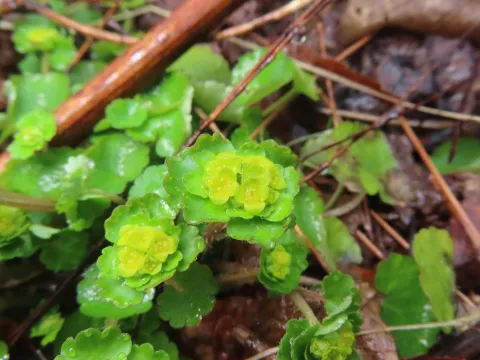
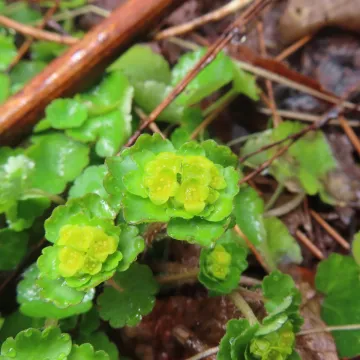
The plant possesses a low-growing, creeping habit with succulent leaves and small yellow-green flowers. The flowers are surrounded by bright bracts, which provide significant aesthetic appeal during the early spring bloom. Its root system is shallow but efficient, allowing the plant to spread rapidly via vegetative propagation.
Agrotechnical requirements focus on site selection and moisture management. The crop requires well-drained but consistently moist soil, rich in organic matter. Cultivators should avoid locations with direct afternoon sunlight, as the foliage is susceptible to scorching. Regular watering and the application of leaf mold are essential practices for maintaining plant vigor.
In terms of pest and disease management, the primary concerns are slugs and snails, which can cause severe damage to the soft tissues. Pathogens such as fungal root rots may occur if the soil remains waterlogged without adequate aeration. Maintaining good site sanitation and proper drainage is the best defense against these agricultural challenges.
Photo gallery