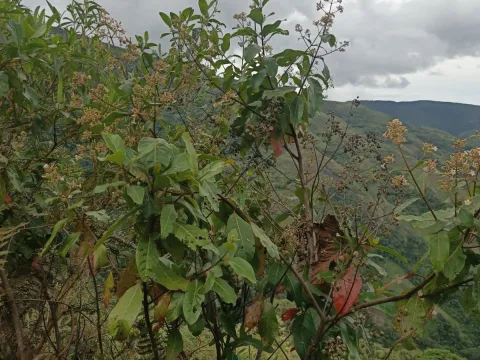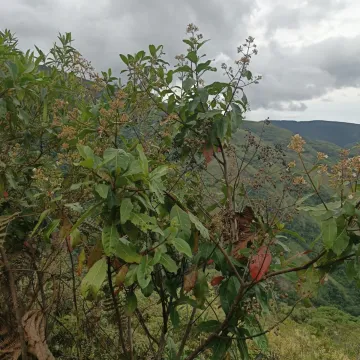
Cinchona calisaya
Cinchona calisaya Wedd.
Description
Cinchona calisaya Wedd., commonly known as the yellow cinchona or quinine tree, is a perennial evergreen plant belonging to the Rubiaceae family. It is historically and economically significant as the primary natural source of quinine, a critical alkaloid used in the treatment of malaria and as a bitter flavoring agent.
The species is native to the cloud forests of the Andes Mountains in South America, specifically in regions of Bolivia and Peru. Today, it is commercially cultivated in various tropical mountainous regions globally, including parts of Indonesia, India, and East Africa, where environmental conditions closely mimic its natural high-altitude habitat.
Botanically, it is a sturdy tree that can grow up to 20 meters tall. It is characterized by its broad, lanceolate, or elliptical leaves and terminal clusters of fragrant, pale-colored flowers. The most valuable part of the plant is the bark, which contains high concentrations of quinine and other related alkaloids that develop as the tree matures.
Agricultural success depends on specific environmental factors, including high atmospheric humidity, moderate temperatures, and well-draining, acidic, nutrient-rich volcanic soils. Young trees require careful shading to protect them from direct, harsh sunlight, while mature trees need ample space to develop their canopy and root systems properly.
Management of cinchona plantations requires vigilance against various pests and diseases that can compromise bark quality. Common challenges faced by cultivators include:
- Root rot caused by poor soil drainage and waterlogging.
- Infestations of leaf-eating insects and borers.
- Fungal pathogens affecting the bark structure, which can drastically reduce alkaloid yield.
Photo gallery