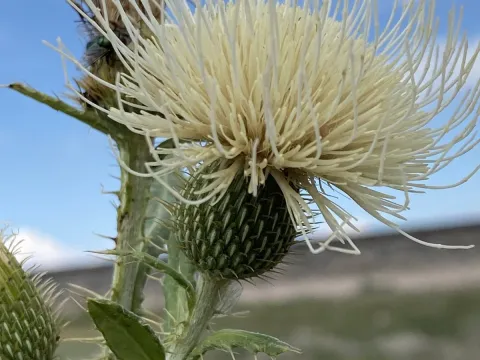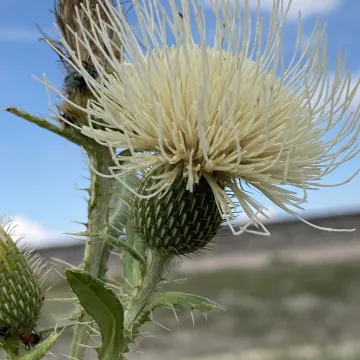
Platte thistle
Cirsium canescens
Description
Platte thistle (Cirsium canescens) is a perennial herbaceous plant belonging to the Asteraceae family. In an agricultural context, it is widely recognized as a problematic weed that infests pastures, rangelands, and crop fields, competing for essential soil nutrients and water resources.
The species is native to North America, particularly the central plains of the United States. Its natural habitat includes prairies, open grasslands, and disturbed soils where it establishes stable populations due to its resilient nature and adaptability to various environmental stressors.
Botanically, it is characterized by its distinct white or grayish tomentose (hairy) stems and leaves, which give the plant its scientific name, canescens. The plants are biennial or short-lived perennials with basal rosettes that develop into tall, spiny-bracted flowering stalks with purplish-pink blooms during the growing season.
Regarding cultivation and habitat requirements, the species thrives in full sun and is highly drought-tolerant. Agronomic management focuses on preventing seed production and damaging the extensive root system. Cultivators often utilize mechanical tillage and timely herbicide applications, specifically targeting the plant during its rosette stage to ensure maximum efficacy.
The ecological and agricultural impact is significant, as the thistle reduces the forage quality for livestock and disrupts natural plant biodiversity. While it hosts various insects and is sometimes susceptible to fungal diseases like rust, these natural factors are rarely sufficient to control its spread in commercial farming environments.
Photo gallery