Flodman's Thistle
Cirsium flodmanii
Description
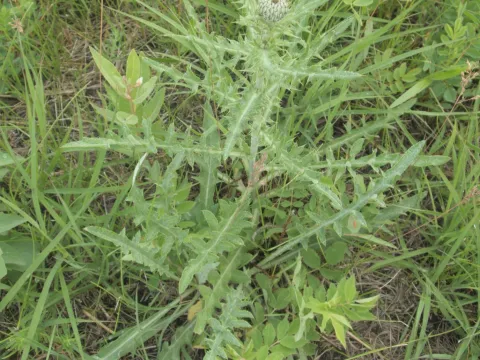
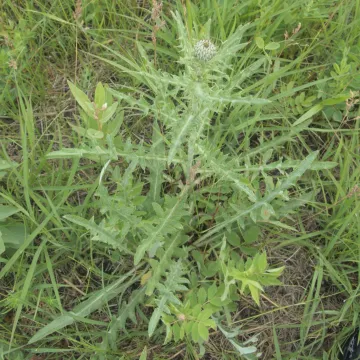
Flodman's Thistle (lat. Cirsium flodmanii) is a perennial herbaceous plant belonging to the Asteraceae family. While often categorized as a persistent weed in agronomic settings, it is a significant component of native prairie vegetation in North America, known for its resilience and ability to thrive in challenging environments.
Originating from the central regions of North America, this species is naturally adapted to the harsh, continental climate of the Great Plains. It typically inhabits grasslands, pastures, and disturbed soil areas. Its ability to colonize diverse landscapes makes it a notable subject of study regarding plant succession and competition in agricultural ecosystems.
Botanically, Cirsium flodmanii is characterized by a deep, rhizomatous root system that facilitates vegetative propagation. The plant features spiny leaves and distinct purple to pink flower heads. It demonstrates a high level of morphological variability, which allows it to adapt to local microclimates and soil compositions throughout its native range.
Regarding climate and soil requirements, the species is highly adaptable, preferring open areas with full sun exposure. It tolerates dry, rocky, and saline soils, which contributes to its status as a robust competitor against forage and crop species. Agronomic control is generally achieved through a combination of physical tillage and herbicide application aimed at depleting the carbohydrate reserves in the root system.
Economically, its impact is largely negative when it encroaches upon agricultural fields, leading to reduced crop yields. However, it provides ecological benefits as a source of nectar for various pollinators. Typical pests include seed-head weevils and various species of flies that can naturally mitigate its population density, though these are rarely sufficient to eliminate the weed entirely.
Photo gallery